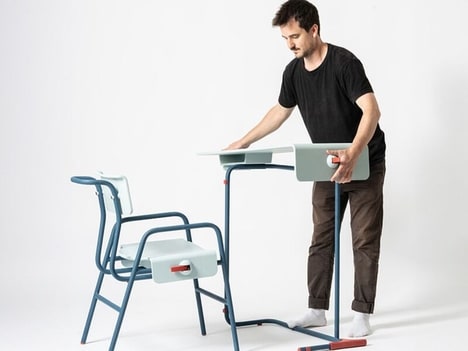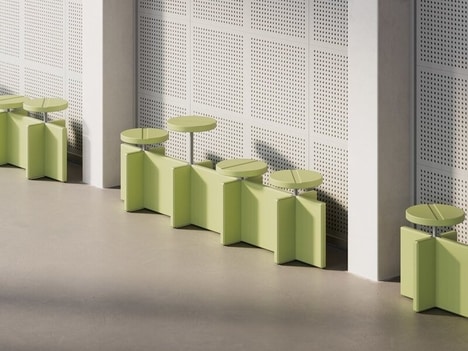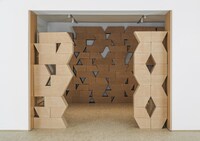
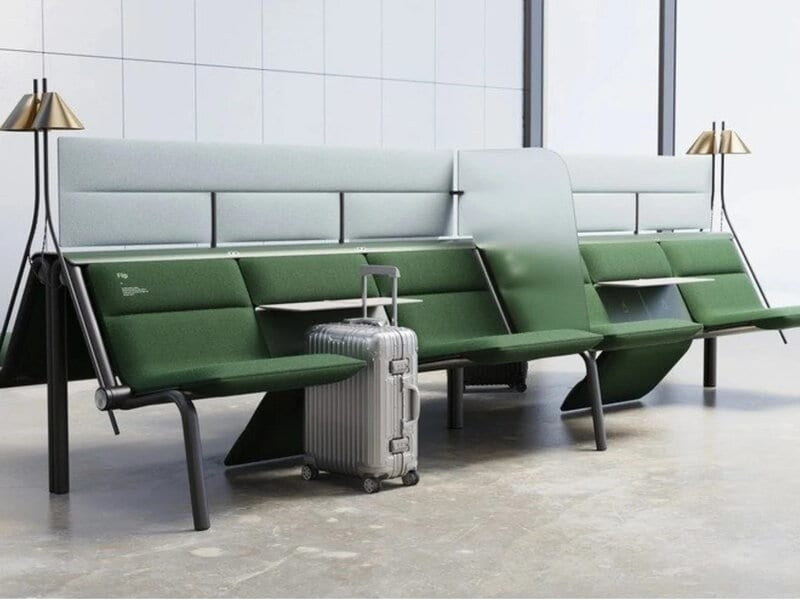
Of My Imagination designed Flip, a modular public seating system with individual seats that users can rotate out of the way by hand. Each seat pivots independently, allowing sections of a bench to switch between seating and clear floor space.
A module can function as a flip-down chair or an open area for luggage, a stroller or additional standing room. The mechanism is intentionally low-tech, using a mechanical latch and rotating joint rather than a motor, app or sensor. This manual approach keeps operation straightforward and reduces reliance on powered components.
The flexibility helps public spaces adapt to rush hours, quieter periods, accessibility needs and physical-distancing requirements by giving users direct control over the seating layout. Although the concept still faces cost, durability and vandalism-resistance testing before broad adoption, it reflects demand for adaptable public infrastructure. Its passive mechanics could give transit operators and facility managers a lower-maintenance way to reconfigure shared spaces.
Image Credit: Of My Imagination
Key Themes Behind This Trend
- User-controlled Infrastructure
- Public fixtures with simple manual adjustability create potential for shared environments that respond fluidly to changing crowd levels, accessibility needs and personal space preferences.
- Low-tech Flexibility
- Mechanical systems that avoid apps, motors and sensors present a disruptive path toward adaptable amenities with lower maintenance demands and fewer operational failure points.
- Convertible Public Space
- Seating that transforms into open floor area reflects a broader shift toward multipurpose civic design where static assets can support movement, storage, distancing and rest.
Where This Applies
- Public Transit
- Stations, platforms and vehicles could benefit from modular seating formats that balance passenger comfort with flexible capacity during peak and off-peak travel periods.
- Urban Furniture
- Street-level amenities are evolving beyond fixed installations as cities explore durable, adaptable designs that improve usability without requiring complex digital infrastructure.
- Facility Management
- Airports, campuses, hospitals and event venues may see value in reconfigurable furnishings that help operators manage fluctuating occupancy, accessibility and space-efficiency requirements.