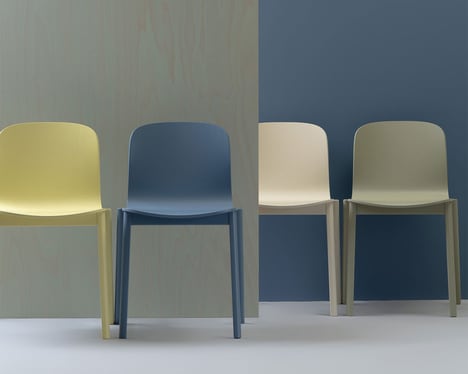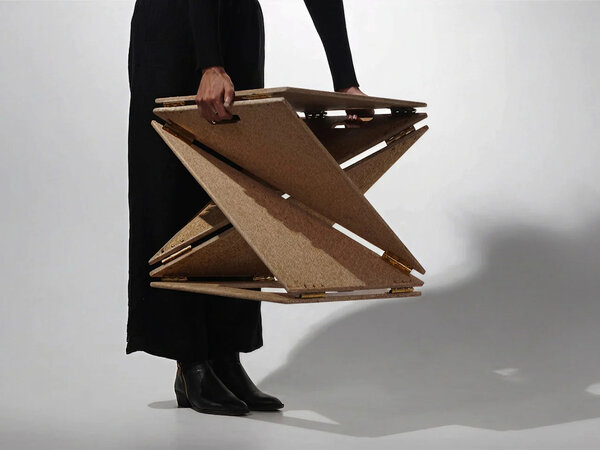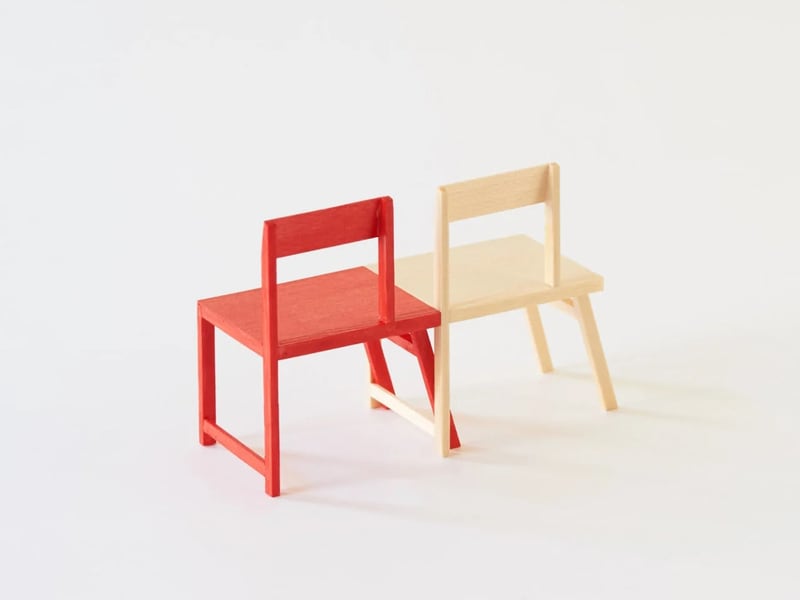
The Spielbein chair is a seating concept by German industrial designer Peter Otto Vosding that uses an asymmetrical leg arrangement to create flexible seating layouts. One side features vertical legs while the opposite side angles outward, allowing multiple chairs to slide together and form continuous bench-style rows without additional connectors. The design takes its name from the German term Spielbein, referring to the free leg used for movement in football.
The angled-leg structure enables individual chairs to transition quickly into shared seating configurations for homes, offices, galleries and event spaces. Inspired by a relaxed standing posture, the silhouette reflects the chair's adaptable function while maintaining a minimalist appearance. Developed as a concept, Spielbein explores how furniture can increase seating capacity through its structural form rather than relying on separate joining mechanisms.
Image Credit: Peter Otto Vosding
What's Driving This Trend
- Connector-free Modularity
- Furniture designs with built-in linking geometry create opportunities for adaptable seating systems that reduce hardware, setup time and storage complexity.
- Asymmetrical Furniture Forms
- Uneven structural profiles introduce new possibilities for products that combine visual distinction with practical reconfiguration in compact environments.
- Space-efficient Seating
- Capacity-focused seating concepts reflect growing demand for interiors that shift between individual comfort and communal use without permanent installations.
Who This Affects Most
- Furniture Design
- Modular silhouettes and integrated connection features signal potential for differentiated product lines that serve residential, workplace and hospitality settings.
- Event Planning
- Rapidly reconfigurable seating formats support more flexible venue layouts where furniture can accommodate changing audience sizes and social arrangements.
- Commercial Interiors
- Minimalist seating systems that convert into bench-style rows align with evolving office, gallery and lobby needs for adaptable, high-density spatial planning.