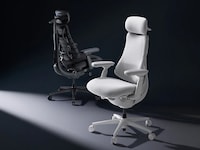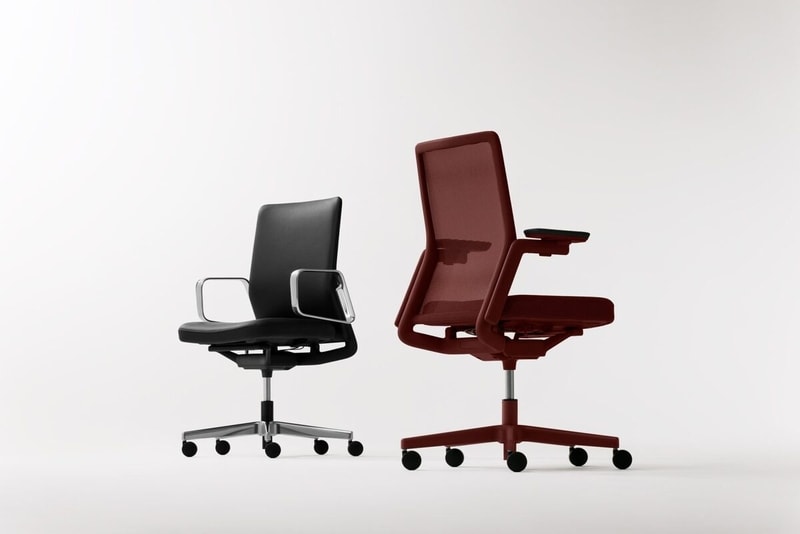
The Muku task chair is a seating design created by Foster + Partners for Japanese furniture brand Okamura. Developed for office, commercial, and residential environments, the chair features a simplified silhouette paired with adjustable ergonomic functions. Users can modify both the seat depth and recline angle, while layered-cushion lumbar support is integrated into the backrest. The chair is available with either fixed or adjustable armrests and is offered in light grey, dark grey, red, and black finishes.
The structure incorporates recycled aluminium components, while the mesh upholstery used for the seat and backrest is manufactured from recycled fishing nets. Okamura designed the chair to accommodate a variety of interior settings through different material, finish, and configuration options. The combination of adjustable support features and recycled materials allows the chair to serve as either a standalone workplace solution or part of a larger furniture system
Image Credit: Foster + Partners
What Makes This Trend Stand Out
- Recycled Ergonomic Seating
- Circular material sourcing is reshaping task chair design as recycled metals and reclaimed ocean plastics become premium inputs for high-performance workplace furniture.
- Adaptive Work Support
- Personalized seat depth, recline, and lumbar systems create opportunities for furniture that serves hybrid offices, home workstations, and shared commercial spaces with fewer product variants.
- Design-led Sustainability
- Minimalist aesthetics paired with responsible materials signal a market shift toward sustainable furnishings that fit seamlessly into residential, corporate, and hospitality interiors.
Sectors Adopting This
- Office Furniture
- Manufacturers are finding new differentiation in modular ergonomic chairs that combine adjustability, recycled components, and adaptable configurations for evolving workplace environments.
- Interior Design
- Specifiers increasingly value furniture systems that balance visual simplicity, flexible finishes, and measurable sustainability attributes across mixed-use commercial and residential projects.
- Recycled Materials
- The use of reclaimed fishing nets and recycled aluminium highlights expanding demand for waste-derived materials that meet durability, comfort, and design expectations in consumer products.