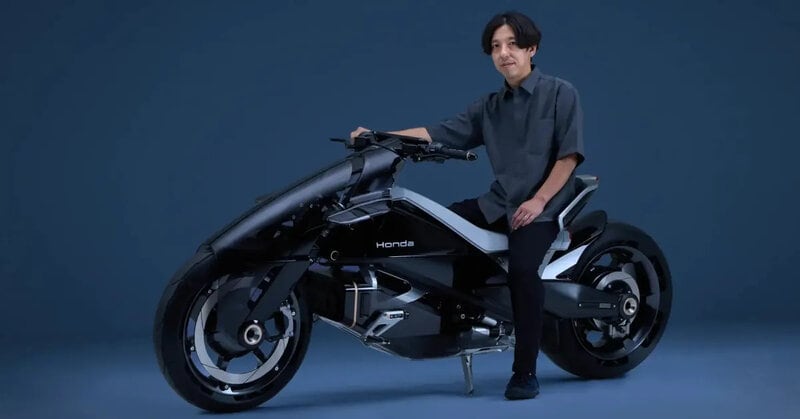
Honda imagined the ‘EV Outlier Concept’ as an electric motorcycle with a motor in each wheel, giving riders all-wheel drive and opening up a layout that does more than swap an engine for a battery. Built as a look at electric motorcycles beyond 2030, it centers the battery in a large middle section and places the rider low behind it.
At EICMA in Milan, the concept traded mirrors for cameras and added a bucket backrest to hold the rider in place. Its first showing came at the 2025 Japan Mobility Show, putting the Milan appearance in a longer concept timeline rather than a sales rollout.
Honda shows how motors in both wheels can turn the EV Outlier into a test case for how electric packaging can reshape motorcycles, not just replace gasoline hardware, while shifting the category conversation toward layout, rider position and control interfaces.
Image Credit: Honda
What's Driving This Trend
- Dual-motor Motorcycles
- Wheel-integrated propulsion creates new possibilities for all-wheel-drive handling, traction management, and performance differentiation in electric two-wheelers.
- Reconfigured Rider Ergonomics
- Battery-centered layouts and low seating positions signal room for motorcycle designs that prioritize stability, comfort, and new control experiences.
- Camera-based Interfaces
- Mirrorless vehicle concepts highlight opportunities for sleeker aerodynamics, expanded visibility systems, and digitally mediated rider awareness.
Who This Affects Most
- Electric Mobility
- Advanced motorcycle architectures broaden the market for EV platforms that move beyond direct combustion-engine replacement.
- Automotive Design
- Concept-driven packaging experiments give manufacturers a way to redefine vehicle proportions, safety systems, and user interaction models.
- Battery Technology
- Centralized battery placement underscores demand for compact, structural, and high-density energy systems tailored to unconventional vehicle formats.