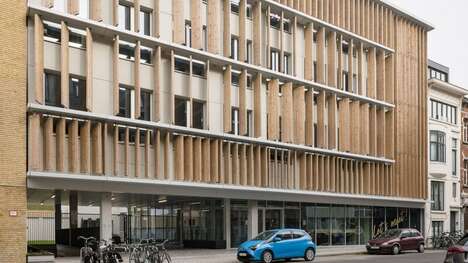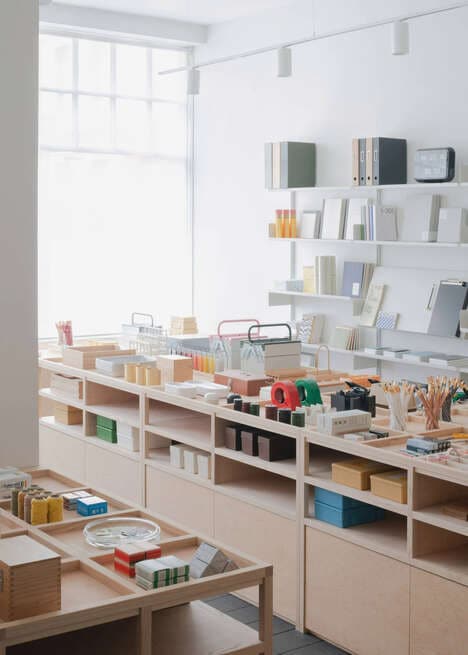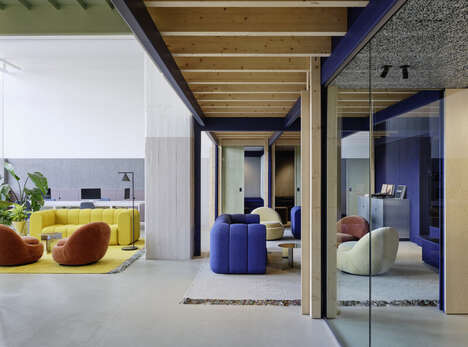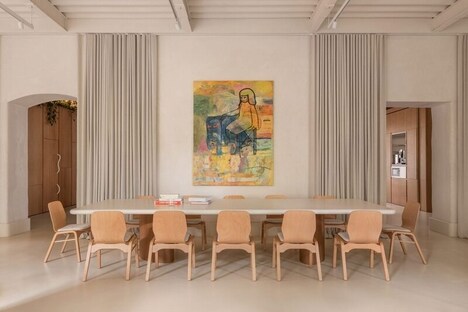
An office building located in the Neukolln neighborhood of Berlin has been fitted with innovatively designed walls that conceal an array of hidden cupboards. Overseen by Munich-based architecture company IFUB, this office is situated in a converted chocolate factory.
The most distinctive feature of this building has to do with the lobby and office section. These distinct areas are separated by a wall that is embedded with patterned cupboards, something that both helps to save space and also offers an eye-catching visual aesthetic. This area of the building is also equipped with a toilet and kitchen.
The inclusion of hidden cupboards in this Berlin office building's partition walls is just one of many features that makes this a great example of restorative architecture that is both functional and visually appealing.
What Makes This Trend Stand Out
- Hidden Cupboard Walls
- Incorporating hidden cupboards into office walls creates a space-saving and visually appealing design.
- Restorative Architecture
- The use of hidden cupboards in this renovated office exemplifies the trend of functional and visually appealing architectural designs.
- Integrated Multipurpose Spaces
- Combining office, toilet, and kitchen spaces within a single area demonstrates the trend towards integrated and efficient work environments.
Sectors Adopting This
- Architecture
- Architects can explore incorporating hidden cupboards into their designs to optimize space and enhance aesthetics.
- Interior Design
- Interior designers can leverage the trend of hidden cupboard walls to create innovative storage solutions that blend seamlessly with the overall design.
- Office Furniture
- The trend of integrated multipurpose spaces opens up opportunities for office furniture companies to create versatile and space-saving solutions.