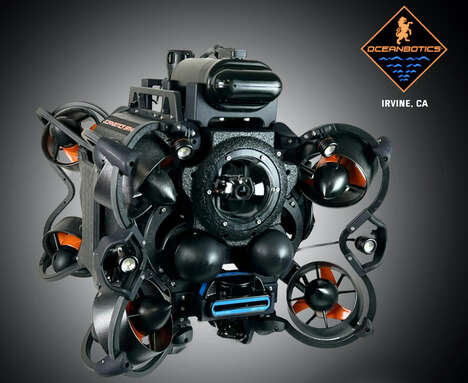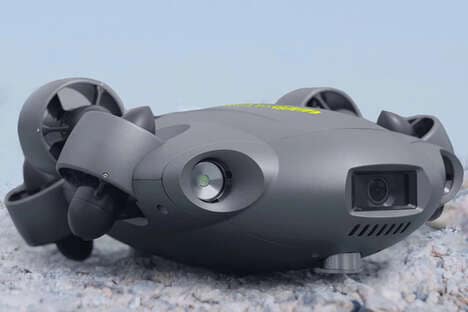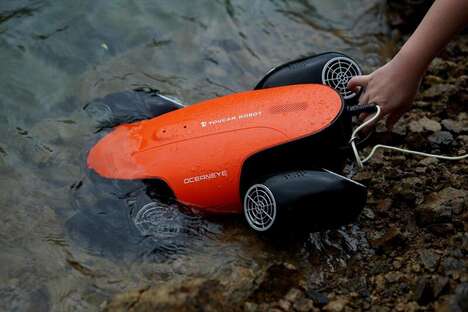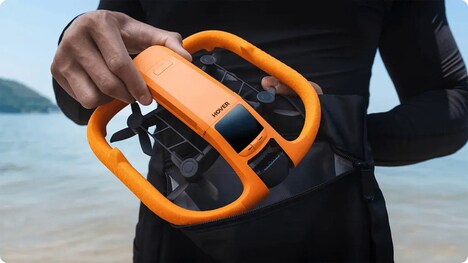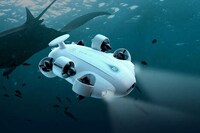

Not five years ago, aerial drones were considered the stuff of the far-flung future, but today not only are those devices relatively common, they've expanded with the likes of the Geneinno Titan. The drone doesn't have much flying prowess -- in fact, it can't fly at all. Rather, the Titan is a deepwater diving drone, providing pilots with access to terrain that they wouldn't previously have been able to explore.
Naturally, diving presents a host of problems not present for flying drones. While air is relatively thin, water is dense, and thus diving drones need to withstand high pressure. The Geneinno Titan delivers, with a diving range of up to 150 meters deep. For perspective, competitors in the growing niche typically dive just 50 to 100 meters.
What's Driving This Trend
- Deepwater Drone Photography
- With the advent of deep-diving underwater drones like the Geneinno Titan, there are disruptive innovation opportunities in the realm of deepwater drone photography.
- High-pressure Drone Technology
- As more companies compete in the growing niche of deep-diving drones, there are opportunities for disruptive innovation in high-pressure drone technology to explore even deeper depths.
- Adaptation of Drone Technology
- Adapting drone technology for underwater exploration presents a trend in technology as companies push the boundaries of deepwater drone capabilities.
Who This Affects Most
- Photography
- The Geneinno Titan and other deep-diving drones provide opportunities for disruptive innovation in the photography industry for capturing images of previously inaccessible underwater terrain.
- Deep-sea Exploration
- As deep-diving drones expand range and capabilities, there are opportunities for disruptive innovation in deep-sea exploration for scientific research and surveying.
- Marine Engineering
- Developing high-pressure drone technology presents an opportunity for innovative disruption in the marine engineering industry to design and produce deep-diving drones with greater capabilities.