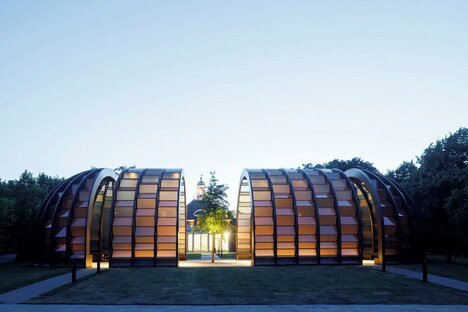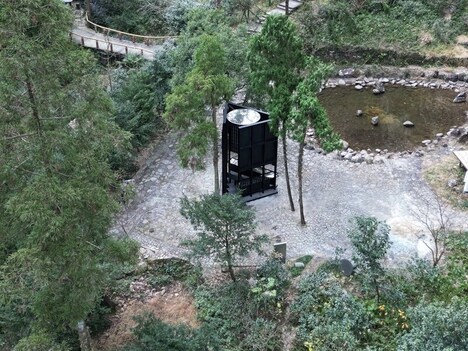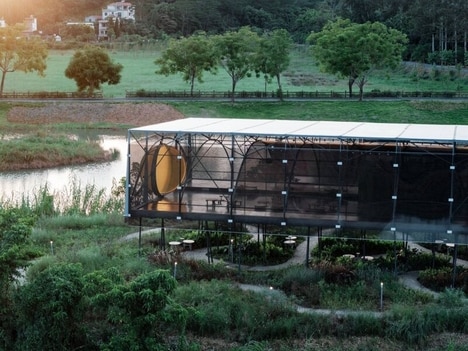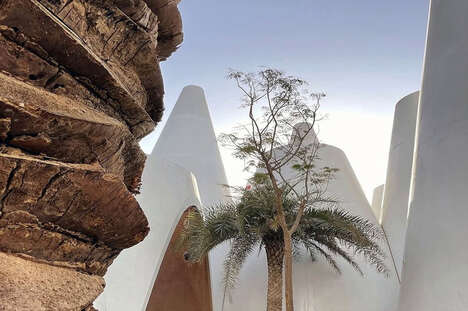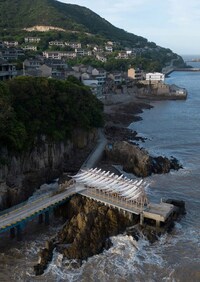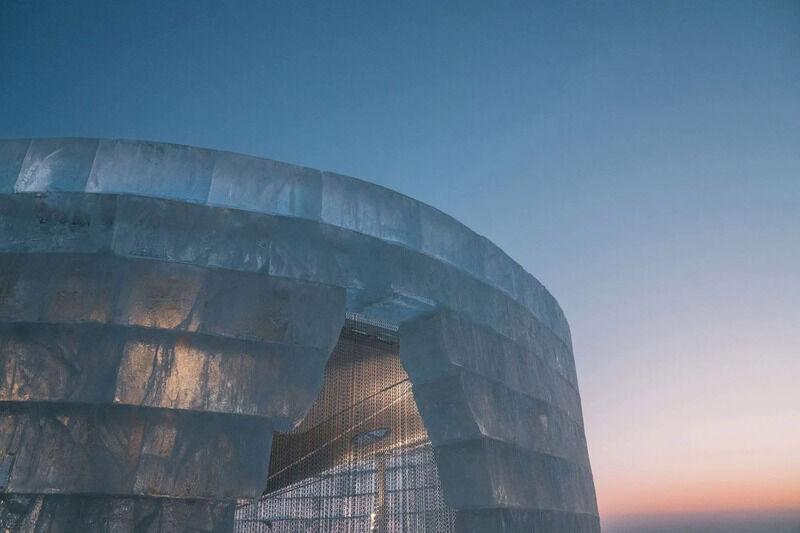
The architects from the Beijing Institute of Architectural Design created the Falling Hours pavilion using a cable membrane as the main structure. It is then stacked with bricks of ice made from river water in Qinhuangdao, China. It is made by a team at BIAB led by architects Xiyan Yang, Guanjia Li, and Chenzhi Yan.
Visitors are invited to collect sand from the beach and this is then poured through the hole at the top of the pavilion, which creates the conical membrane roof, functioning as a large hourglass. The project team explains that "The centre of the hourglass is a pressurised gusset that holds up the roof and at the same time holds up the membrane at the lower end of the spokes."
Image Credit: BIAD
Why This Trend Is Growing
- Cable Membrane Structures
- Architects are using cable membranes as the primary structure for innovative pavilions.
- Ice Block Forming
- Ice blocks made from river water are being used as building materials in architectural projects.
- Interactive Installations
- Architects are incorporating visitor engagement by creating installations that rely on visitor participation.
Industries Being Reshaped
- Architecture
- The architecture industry can explore new possibilities by incorporating cable membrane structures and ice block forming techniques in their designs.
- Construction
- The construction industry can venture into using ice blocks made from river water as a sustainable building material in their projects.
- Tourism
- The tourism industry can benefit from interactive installations that provide unique and engaging visitor experiences.