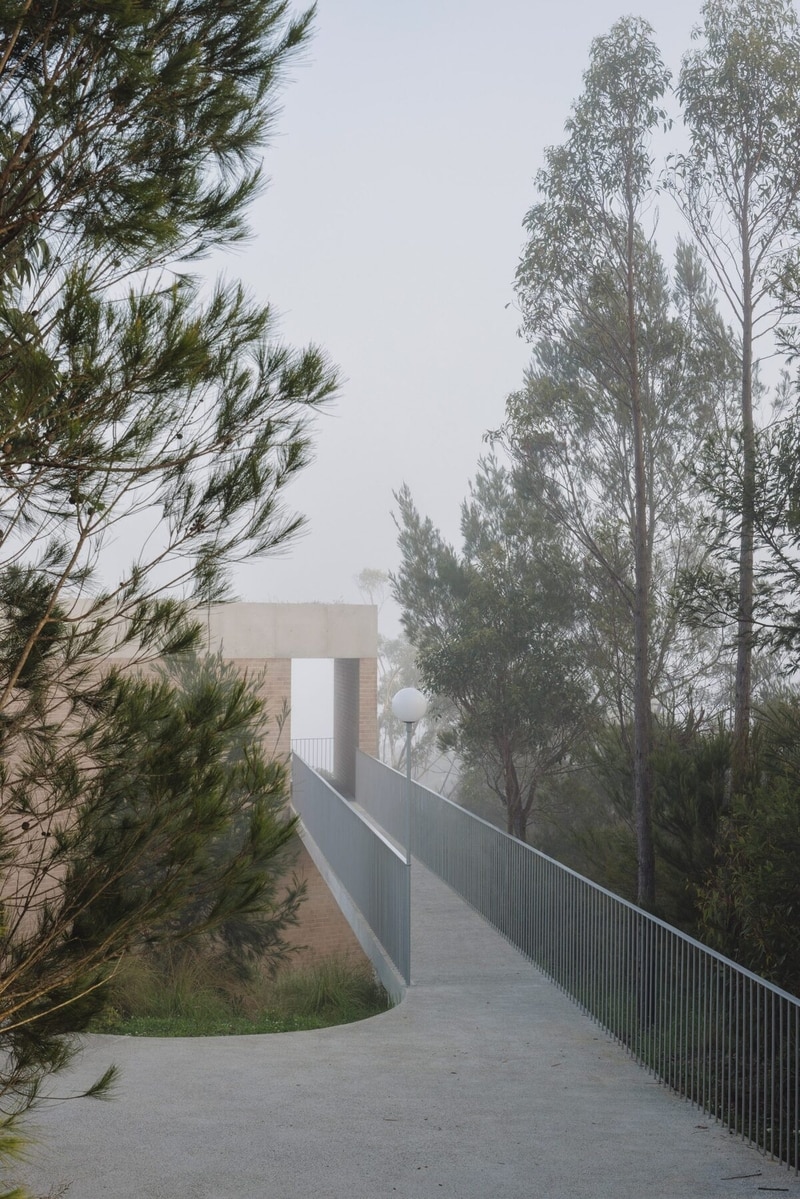
EA House occupies a previously abandoned escarpment site in New South Wales that had long been considered unbuildable due to its cliff edge and surrounding gorge. Designed by Bokey Grant, the 170-square-metre residence adopts a restrained footprint that preserves the existing bushland without removing any trees. A monolithic exterior of brick, concrete, textured materials, and an 18-metre access bridge allows the two-level home to blend into the surrounding rock formation while drawing inspiration from nearby national park lookouts and the appearance of both a watchtower and concealed bunker.
Built within Australia's highest bushfire classification, the house incorporates thick insulated walls, Flame Zone glazing, fire-resistant timber windows and doors, and a gutter-free roof to improve passive resilience. Three bedrooms, two bathrooms, and a flexible study occupy the upper level, while the lower floor contains an open-plan living, dining, and kitchen area overlooking the national park.
Image Credit: Clinton Weaver
What's Driving This Trend
- Bushfire-resistant Homes
- Climate-exposed residential design is creating demand for passive fireproofing systems, resilient materials, and architecture that treats extreme weather risk as a core design parameter.
- Unbuildable-site Architecture
- Constrained cliffs, escarpments, and irregular terrain are becoming viable locations through compact footprints, bridge access, and engineering-led construction methods.
- Camouflaged Nature Retreats
- Low-impact homes that blend into rock formations and bushland signal opportunities for premium retreats that prioritize visual discretion, habitat preservation, and immersive landscape views.
Who This Affects Most
- Residential Architecture
- Architects are redefining remote housing through resilient structures that combine environmental sensitivity with high-performance safety standards.
- Construction Materials
- Fire-rated glazing, insulated concrete, brick, and treated timber point to growing material markets shaped by climate adaptation and passive protection.
- Luxury Real Estate
- Remote properties on difficult terrain can gain new value when resilience, privacy, and national-park proximity are positioned as defining lifestyle features.