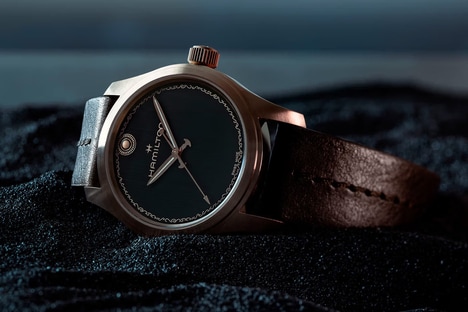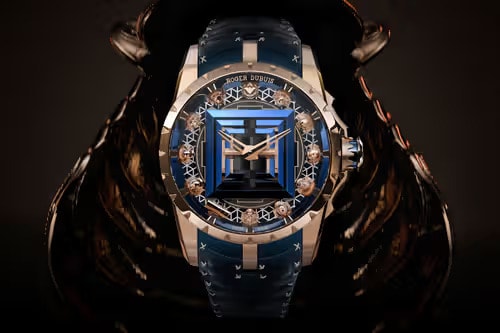
The Excalibur The Kabuto Legacy combines Swiss watchmaking with references to Japan's Edo period through a dial centered on an abstract interpretation of Edo Castle. Developed with historian Frederik Cryns, the limited-edition timepiece features 12 hand-engraved 18k pink gold Kabuto helmets representing prominent samurai commanders, housed within a 45 mm 18k pink gold case. A blue calfskin strap with stitched segments inspired by traditional samurai armor completes the historical design.
The watch is powered by Roger Dubuis' in-house RD821 automatic caliber, offering a 48-hour power reserve and Poinçon de Genève certification. An open caseback reveals the movement beneath a sapphire crystal, while a blue-coated pink gold ring is laser engraved with the 12 Kamon family crests of the featured commanders.
Image Credit: Roger Dubuis
Part of the cluster
Reference Watch
Luxury timepieces are relying on cross-industry inspiration to stand out
Explore the cluster

Why This Trend Is Growing
- Heritage-embedded Luxury
- Limited-edition products that weave documented cultural history into high-end design create opportunities for collectors seeking objects with deeper provenance and narrative value.
- Artisanal Micro-details
- Hand-engraved miniature elements and symbolic motifs elevate craftsmanship into a point of differentiation for brands competing in ultra-premium markets.
- Cross-cultural Watchmaking
- The fusion of Swiss horology with Japanese samurai aesthetics signals space for luxury maisons to reinterpret global heritage through precision engineering and collectible design.
Industries Being Reshaped
- Luxury Watches
- Historically themed complications and certified in-house movements broaden the appeal of mechanical watches as both technical artifacts and cultural investments.
- Premium Collectibles
- Scarcity, provenance, and expert collaboration strengthen demand for limited objects that function as wearable art within affluent collector communities.
- Cultural Tourism
- Luxury goods tied to specific eras, figures, and landmarks can extend the commercial reach of heritage storytelling beyond museums and travel experiences.