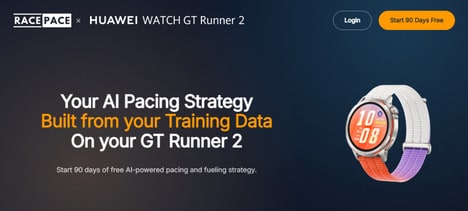
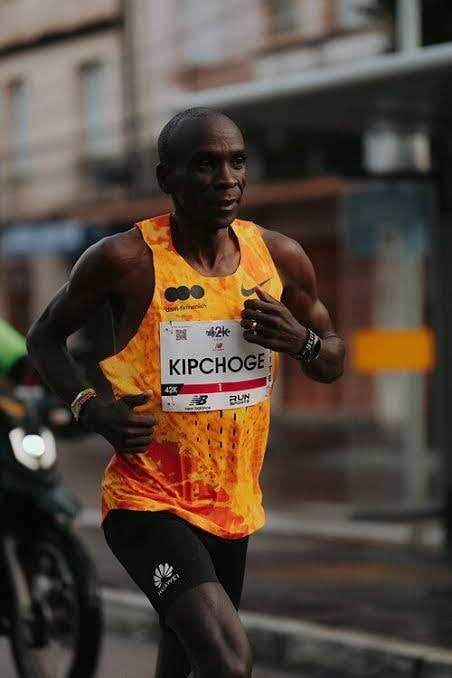
Eliud Kipchoge wore the 'HUAWEI WATCH GT Runner 2' during the NB42K Porto Alegre marathon, showcasing the smartwatch's professional-grade GPS accuracy and full-marathon monitoring capabilities. The two-time Olympic champion, who serves as Huawei's global ambassador, helped develop the device alongside the high-performance team at dsm-firmenich, testing its Intelligent Marathon mode on the same course where he won his first Olympic gold in 2016.
The smartwatch's virtual pacer calculates real-time pace deviations and displays an on-screen avatar that guides runners kilometer by kilometer toward their target pace, bringing a feature once reserved for elite athletes and professional coaching teams to everyday runners.
Huawei has shown how athlete collaborations are helping wearable brands bring elite-level training technology to a broader community of recreational runners.
Image Credit: Huawei
Why This Trend Is Growing
- Elite-coached Wearables
- Professional athlete input is transforming consumer devices into credible training companions with features modeled on high-performance coaching systems.
- Virtual Pacer Guidance
- Real-time avatar-based pacing creates a more intuitive layer of feedback for recreational runners seeking structured marathon support without personal coaches.
- Precision Marathon Tracking
- Advanced GPS accuracy and race-specific monitoring are raising expectations for wearables that can deliver dependable performance data across full endurance events.
Industries Being Reshaped
- Sports Technology
- Athlete-tested devices are expanding the market for performance tools that translate elite training methods into accessible digital products.
- Consumer Wearables
- Premium smartwatch brands are finding differentiation through specialized fitness modes that serve serious amateurs as well as lifestyle users.
- Endurance Fitness
- Marathon communities are becoming fertile ground for connected products that blend biometric tracking, pacing intelligence, and race-day personalization.