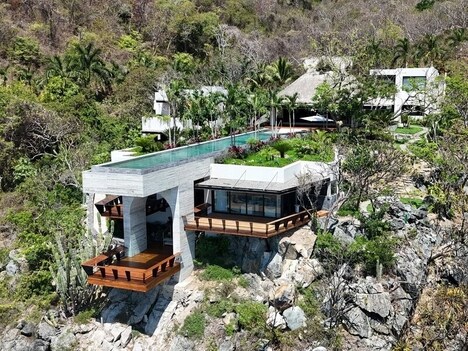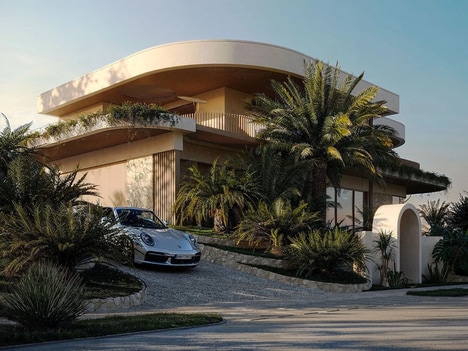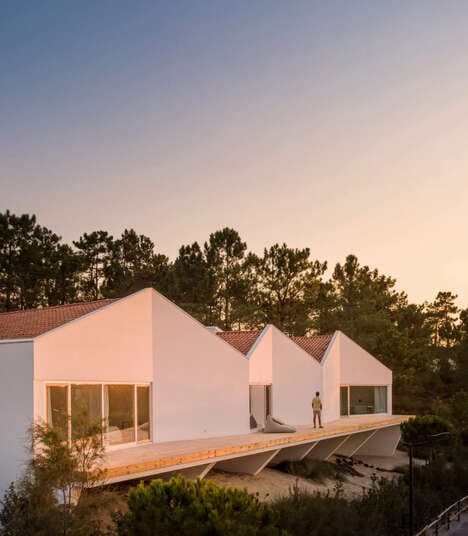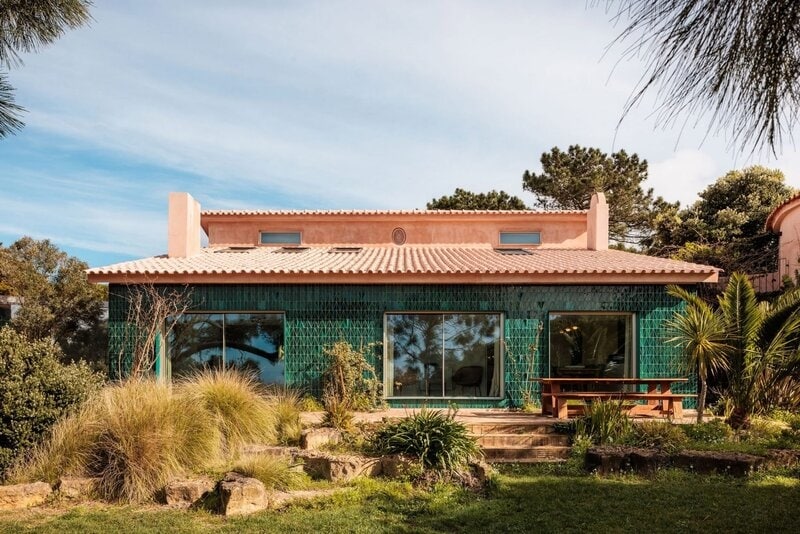
The AIP Azóia villa by João Tiago Aguiar Arquitectos is perched on a steep cliff above the coastal cliffs of Azóia, Portugal, completed in 2025. The design seeks an architecture that fades into the site, using a reflective glass central volume to mirror vegetation and sky, rendering the house nearly invisible from certain viewpoints. Handmade two- and three-dimensional tiles in ocean-hued tones line lower façades, visually linking the structure to its environment while echoing the ocean’s movement.
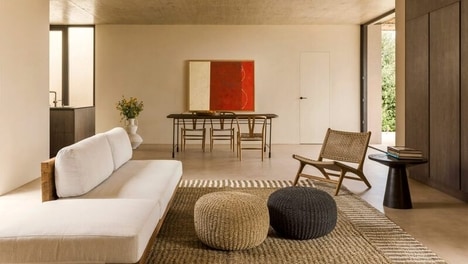
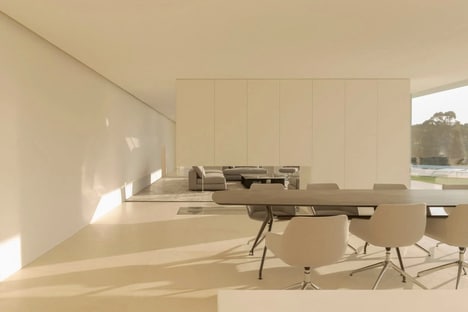
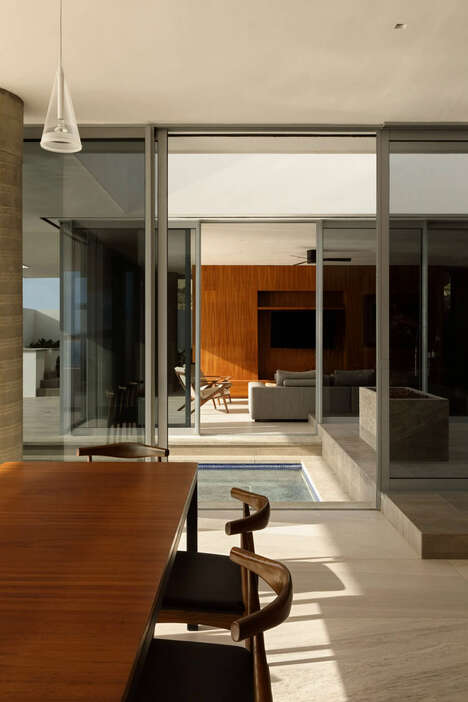
Inside, the layout was rethought to enhance light, function, and vistas. A previously isolated kitchen now flows seamlessly into shared social areas, and three compact bedrooms were replaced by two spacious suites opening to the garden. Interior finishes include Azul Macaúbas stone and bespoke woodwork, while the pool and tile motifs extend the building’s blend with the terrain. The result is a serene, sustainable, cliffside home that prioritizes place over presence. Total build area is approximately 460 m², offering a quietly refined architectural statement.
Image Credit: Francisco Nogueira
What Makes This Trend Stand Out
- Invisible Architecture
- Designs that meld architecture with natural environments using reflective materials are emerging, creating opportunities for structures that harmonize with their surroundings.
- Eco-integrated Design
- Architecture that incorporates materials and aesthetics from its natural surroundings is gaining traction, opening paths for innovative sustainable building practices.
- Open-plan Living
- The shift towards open-plan interiors that emphasize connectivity and ambient light presents new avenues for home designs that prioritize seamless living spaces.
Sectors Adopting This
- Eco-friendly Construction
- The demand for sustainable architectural solutions is driving growth in eco-friendly building industries that focus on reducing environmental footprints.
- Luxury Home Building
- High-end residential design is evolving, with a focus on unique natural settings and custom materials, driving innovation in the luxury housing industry.
- Interior Design
- As open-plan living becomes increasingly popular, the interior design sector is adapting by creating versatile, flexible furnishings that cater to expansive, flowing environments.