
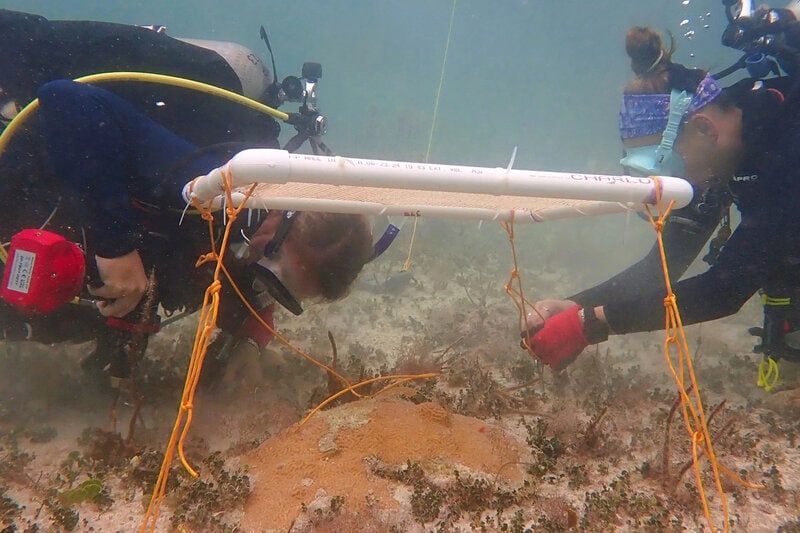
Researchers are testing underwater umbrellas that give threatened corals a shaded buffer during marine heat waves, offering reef teams a simple way to reduce bleaching on priority colonies. The canopies, built by a Nova Southeastern University-led team from pipes and nylon cloth, are fixed to the seabed and hover above corals to cut the sunlight that worsens heat stress.
In trials at Newfound Harbor in the Florida Keys, the shades lowered light exposure by 60% and the covered brain corals bleached less than matching controls. Some shaded colonies also regained color, suggesting the approach can help even after bleaching has started.
For the category, reef restoration work gets a low-tech stopgap for coral nurseries and small outplant sites while broader climate action catches up. It also points toward larger shading builds that could extend the same idea to more reef area.
Image Credit: Arelys Chaparro
Key Themes Behind This Trend
- Reef-shading Infrastructure
- Modular underwater shade systems create new potential for localized climate adaptation tools that protect high-value coral sites during marine heat waves.
- Low-tech Marine Intervention
- Simple materials such as pipes and fabric reveal a market for affordable conservation hardware that can be deployed quickly by reef restoration teams.
- Targeted Coral Triage
- Priority-based protection of vulnerable colonies signals opportunities for data-guided reef management services that focus limited resources on the most resilient or valuable ecosystems.
Where This Applies
- Marine Conservation
- Reef restoration organizations gain a practical pathway for expanding temporary protective infrastructure around nurseries, outplant zones, and threatened coral colonies.
- Environmental Engineering
- Demand for scalable seabed-mounted structures could support specialized design, materials, and installation solutions for climate-stressed coastal ecosystems.
- Climate Adaptation
- Localized reef-cooling and shading methods broaden the adaptation toolkit with interim measures that reduce ecological damage while long-term emissions and resilience strategies progress.