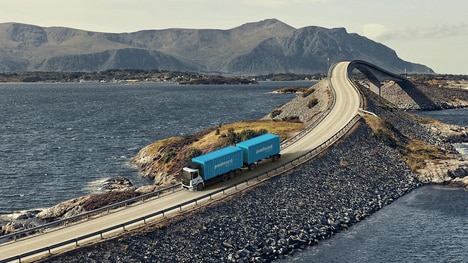
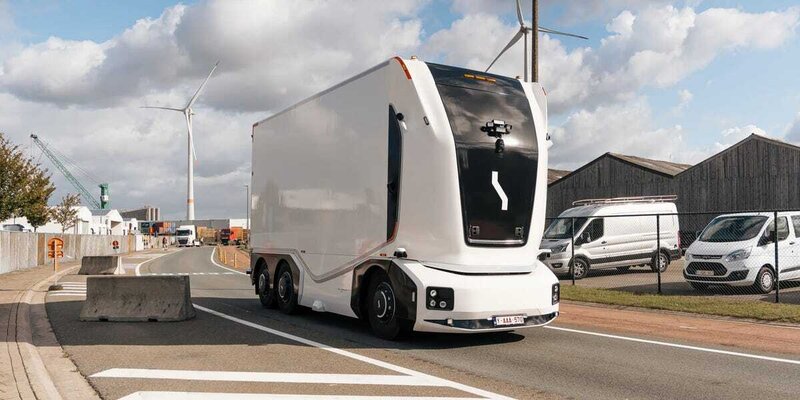
Swedish truckmaker Einride has deployed its cabless, battery-electric autonomous truck operating at SAE Level 4 for commercial grocery deliveries in Germany. The vehicle has no cab and runs on its approved route without a driver or onboard safety operator. Einride describes it as the country’s first cabless autonomous truck in regular public-road service.
The truck hauls goods along a Lidl logistics route connecting a warehouse, distribution center and retail store under a permit from Germany’s Federal Motor Transport Authority. It operates within day-to-day deliveries rather than solely at a test site, and the companies plan to expand the route into a multistop network serving additional Schwarz Group locations.
For supply chains, the deployment tests how autonomous electric trucks can address driver shortages and reduce tailpipe emissions on predictable retail routes. The project reflects a broader shift from autonomous freight pilots toward revenue-generating logistics operations. For Einride, German approval strengthens its regulatory position and provides a commercial reference point for further European expansion.
Image Credit: Einride
Why This Trend Is Growing
- Cabless Freight Automation
- Regular public-road deployment of driverless trucks creates openings for purpose-built vehicle platforms optimized around cargo capacity, uptime and remote supervision rather than human operators.
- Electric Retail Logistics
- Battery-electric autonomous delivery routes give retailers a pathway to combine emissions reduction with predictable, high-frequency freight movements across warehouses, distribution centers and stores.
- Commercial Autonomous Operations
- Revenue-generating deployments shift autonomous trucking from controlled pilots into logistics networks where routing software, fleet orchestration and regulatory compliance become key sources of differentiation.
Industries Being Reshaped
- Freight Transportation
- Predictable regional routes are becoming early proving grounds for autonomous electric fleets that can reshape cost structures, asset utilization and driver allocation models.
- Retail Supply Chain
- Grocery and big-box distribution networks offer dense, repeatable lanes where autonomous freight systems can improve delivery reliability while supporting sustainability mandates.
- Mobility Technology
- Advances in remote monitoring, Level 4 autonomy and electric drivetrains are expanding the market for integrated hardware-software solutions tailored to commercial logistics.