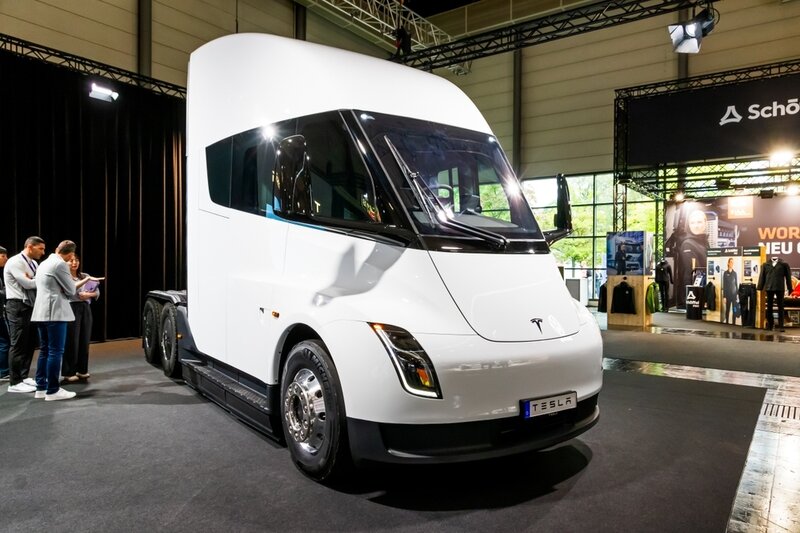
Swedish trucking company Einride has announced plans to buy 500 Tesla Semi trucks, tripling its electric fleet and making electric big rigs available to customers, including Amazon, starting in September. The trucks will be managed through Einride's Saga AI fleet management platform, letting customers access electric freight capacity without the financial and logistical burden of ownership.
The deal extends Einride's electric freight network across key North American corridors in California, Georgia, New Jersey and Texas, and is expected to help convert roughly $800 million in potential long-term recurring revenue into actual business.
Einride's massive Tesla Semi purchase order signals growing confidence that heavy-duty electric freight is approaching the operational maturity needed to serve major shippers at commercial scale.
Image Credit: Shutterstock/VanderWolf Images
Why This Trend Is Growing
- Electric Freight-as-a-service
- Subscription-style access to zero-emission trucking capacity creates room for logistics providers to monetize fleet electrification without requiring shippers to own vehicles or charging assets.
- AI-managed Fleet Scaling
- Centralized software platforms that optimize routes, charging, utilization and maintenance can reshape heavy-duty transport economics as electric fleets expand across regional corridors.
- Corporate Decarbonized Shipping
- Major retailers and manufacturers gain new pathways to reduce Scope 3 emissions as commercial-scale electric trucking networks become available for high-volume freight lanes.
Industries Being Reshaped
- Logistics and Freight
- Electric big-rig networks introduce new competitive models in which capacity, emissions performance and software-enabled reliability become key differentiators for shippers.
- Electric Vehicles
- Heavy-duty truck adoption broadens the EV market beyond consumer cars, accelerating demand for commercial batteries, charging infrastructure and fleet-grade vehicle platforms.
- Supply Chain Technology
- AI fleet management systems become increasingly valuable as companies coordinate electric vehicle availability, corridor planning and cost-efficient freight execution at scale.