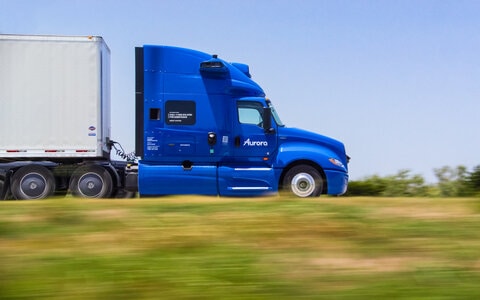
Aurora Innovation launched its second-generation self-driving trucks, expanding its driverless commercial network to 10 routes across the U.S. Sun Belt. Built on the International LT Series platform and powered by Aurora's next-generation hardware, designed to last one million miles, the new fleet follows nearly 440,000 driverless miles logged since the company's first commercial driverless deployment last year.
Aurora closed its Safety Case for the new truck and hardware before launch and partnered with manufacturing supplier Roush to integrate redundant systems at a dedicated production facility. The partnership positions the companies to reach an annual production run rate of 1,000 Aurora trucks later this year, supporting broader deployment across Aurora's growing freight network.
Aurora shows how combining validated autonomous technology with dedicated manufacturing capacity can move self-driving trucking beyond limited pilots and closer to reshaping how goods travel across the country.
Image Credit: Aurora Innovation
What Makes This Trend Stand Out
- Scaled Driverless Freight
- Autonomous trucking networks are shifting from pilot programs into commercial route expansion, creating new models for high-mileage freight movement across regional corridors.
- Redundant Vehicle Systems
- Built-in backup hardware and safety architectures are becoming central to autonomous fleet reliability, opening space for suppliers specializing in durable, fail-safe mobility components.
- Autonomous Manufacturing Partnerships
- Dedicated production alliances are helping self-driving technology companies accelerate fleet deployment, signaling opportunities for contract manufacturers to serve emerging mobility platforms.
Sectors Adopting This
- Freight Transportation
- Long-haul logistics is being reshaped by driverless trucks that can support more consistent route coverage and reduce dependence on traditional driver availability.
- Automotive Manufacturing
- Commercial vehicle production is evolving around autonomous-ready platforms, with demand growing for factory integration of sensors, computing hardware, and redundant controls.
- Supply Chain Technology
- Digital freight networks are gaining value as autonomous trucks generate operational data that can improve routing, capacity planning, and shipment visibility.