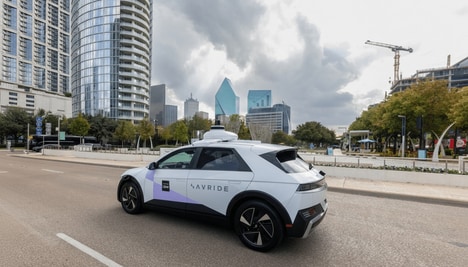
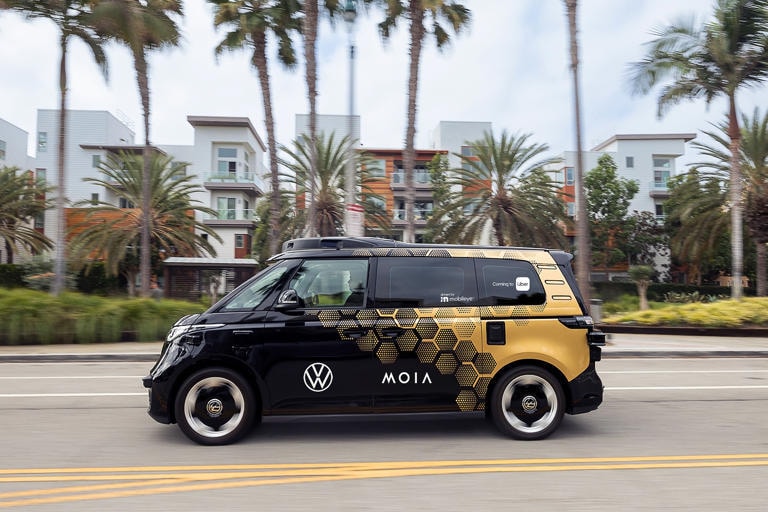
Volkswagen’s U.S. arm MOIA America and Uber began testing autonomous ID. Buzz microbuses in Los Angeles, featuring electric, four-seat production-bodied vehicles adapted for driverless operation. The pilot started with about 10 autonomous ID. Buzz vans and will run from a new joint operations facility in the city.
The small test fleet will initially operate with human safety operators on board while teams refine software, rider flows and fleet logistics. Volkswagen said it plans to scale to more than 100 vehicles and transition to driverless operations in 2027, pending regulatory approvals from California agencies.
For riders, the rollout signals a move toward shared, electric robotaxis that blend minivan comfort with autonomous ride-hailing convenience; the program also underscores broader industry trends in automaker–platform partnerships and scaled urban robotaxi pilots.
Image Credit: MOIA/Volkswagen
What's Driving This Trend
- Autonomous Shared Micro-mobility
- Integration of small electric autonomous vans into shared mobility networks creates opportunities to replace short urban car trips with higher-occupancy, on-demand services.
- Automaker-platform Partnerships
- Partnerships between vehicle manufacturers and ride-hailing platforms are enabling combined hardware, software and customer interfaces that redefine ownership and service delivery models.
- Scaled Urban Robotaxi Pilots
- Large-scale city pilots with hundreds of vehicles generate datasets and operational experience that can accelerate regulatory acceptance and standardized fleet operations.
Who This Affects Most
- Public Transit
- City transit networks stand to be disrupted by flexible, electric microbuses that offer first-mile/last-mile connectivity and demand-responsive routing.
- Fleet Management and Logistics
- Operators of commercial fleets could leverage autonomous microbus platforms for optimized routing, predictive maintenance and shared asset utilization.
- Vehicle Manufacturing and Software
- Automakers and Tier-1 suppliers face changes in product design as integration of autonomous systems and software-defined features becomes central to vehicle value.