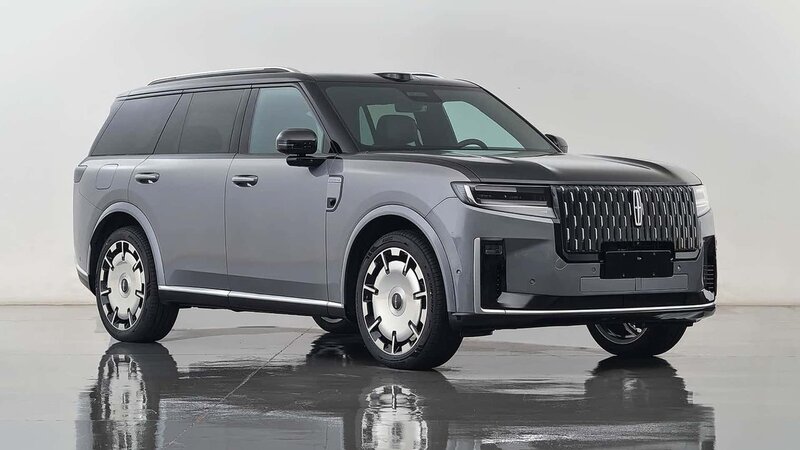
Lincoln is bringing back the ‘Aviator’ name for Chinese buyers with the ‘Aviator EX8,’ a plug-in hybrid crossover built through its Changan joint venture. It is not a return of the earlier ‘Aviator PHEV,’ which ended in 2024. Instead, this is a separate China-market vehicle aimed at the country’s new-energy segment. The move gives Lincoln a local plug-in entry where it currently has none.
The crossover is similar in size to the previous ‘Aviator,’ but its powertrain takes a different path. It uses a Changan-built 1.5-liter turbo engine rated at 148 horsepower. A roof-mounted lidar unit points to added driver-assist capabilities when it reaches the market.
China-only availability positions the ‘Aviator’ badge as Lincoln’s route back into the country’s plug-in field. The Changan-based setup also moves the brand nearer to local buyer expectations than a carryover U.S. design.
Image Credit: MIIT
Key Themes Behind This Trend
- Localized Hybrid Revivals
- Legacy nameplates gain renewed relevance when adapted as market-specific plug-in models rather than reused global designs.
- Joint-venture Electrification
- Automaker partnerships with domestic manufacturers create faster paths into regulated new-energy segments with locally aligned engineering.
- Lidar-enabled Crossovers
- Roof-mounted sensing hardware in mainstream premium SUVs signals growing differentiation around advanced driver-assist capabilities.
Where This Applies
- Automotive Manufacturing
- China-focused hybrid platforms reveal how regional production ecosystems can reshape product planning for global vehicle brands.
- Electric Mobility
- Plug-in hybrid crossovers occupy a transitional space where buyers seek electrified driving without full battery-electric dependence.
- Driver-assistance Technology
- Integrated lidar systems expand opportunities for suppliers developing perception, safety, and semi-autonomous mobility features.