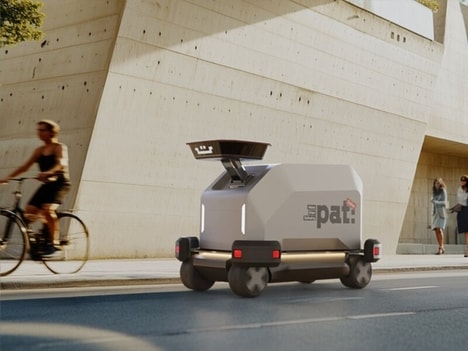
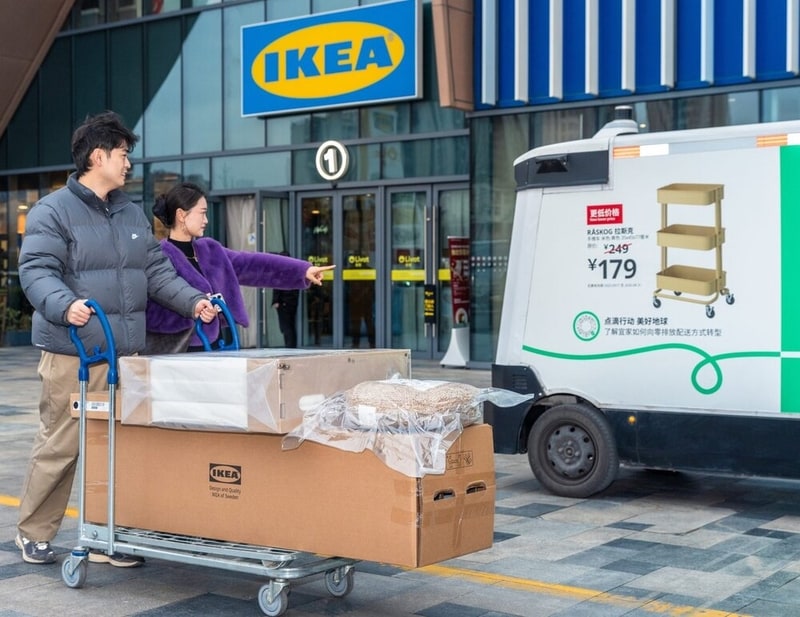
Neolix, a Beijing-based company specializing in Level 4 autonomous delivery vehicles, has had its RoboVans permanently adopted by IKEA China. This development follows a successful pilot program at the store in Hefei, Anhui Province.
Neolix's RoboVans are designed to operate in complex environments without human intervention, navigating various weather conditions and traffic situations while being remotely monitored for safety.
The autonomous delivery vehicles, specifically the Neolix X6 model, were used during the trial to transport customer orders from an external warehouse to the store for self-pickup, as well as to assist with in-store replenishment. The results of the pilot showed a significant improvement in operational efficiency, with average customer waiting times for self-pickup orders dropping from six hours to just two hours. Additionally, IKEA China experienced a reduction in transportation costs of more than 50% betwen IKEA units.
Image Credit: IKEA China
Why This Trend Is Growing
- Autonomous Last-mile Delivery
- Permanent deployment of RoboVans indicates potential for autonomous fleets to reshape last-mile economics by lowering costs and compressing delivery lead times.
- In-store Robotics Integration
- Integration of autonomous vehicles into store replenishment workflows signals new models for automated inventory flow that reduce manual labor and shelf-out occurrences.
- Remote-monitored Level-4 Vehicles
- Widespread use of remotely supervised Level-4 vans points to scalable operations where human oversight is centralized, enabling broader adoption in complex urban environments.
Industries Being Reshaped
- Retail Furniture
- IKEA’s adoption highlights opportunities for furniture retailers to redesign fulfillment networks around autonomous shuttles that improve customer pickup experiences and cost structures.
- Logistics & Supply Chain
- Significant transport-cost reductions suggest logistics providers can leverage autonomous vehicles to create freight models with lower marginal costs and more frequent, flexible routing.
- Urban Mobility
- Deployment of delivery-focused autonomous vans reveals implications for city traffic patterns and curbside management as shared regulatory and infrastructure adaptations become necessary.