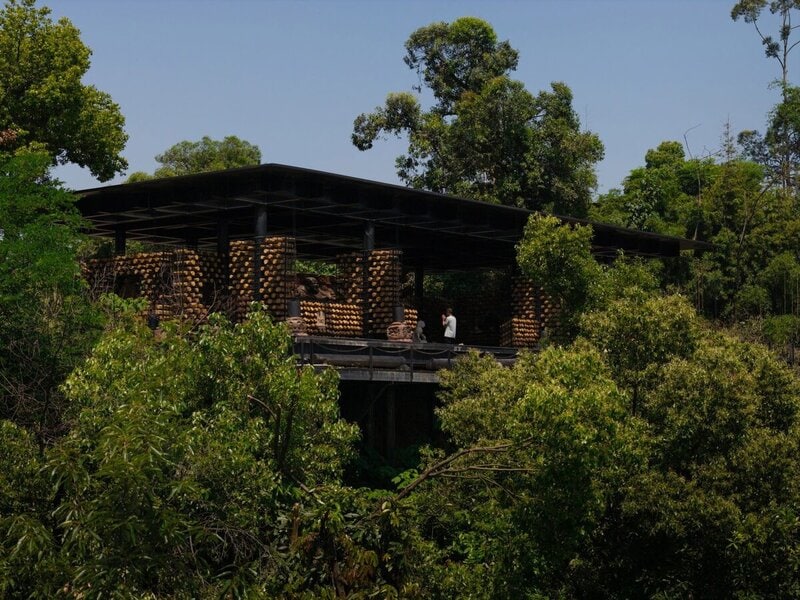
The Nanhai Buddha Pavilion by DoDesign is a shelter in Chongqing, China, created around a Ming-dynasty Buddhist shrine and a Buddha sculpture carved into a crape myrtle tree. The pavilion features black steel columns, a flat timber roof, and gridded steel walls filled with loose cedar logs that form permeable partitions throughout the structure. Skylights positioned at the center and perimeter of the roof introduce natural light while protecting the shrine from direct sun and rain.
Approximately 4,000 cedar logs were produced for the project, with around half installed within the steel grids and the remainder left for visitors to insert or rearrange. The interactive walls allow the pavilion to evolve through public participation, while the cedar is intended to weather naturally over time. Standalone gridded walls define shaded spaces around the central shrine, creating an open layout that combines shelter, circulation, and places for reflection.
Image Credit: DoDesign
Key Themes Behind This Trend
- Participatory Sacred Architecture
- Visitor-adjustable partitions transform heritage shelters into evolving communal environments where cultural preservation blends with shared authorship.
- Weathering Material Design
- Naturally aging cedar surfaces create long-term visual change, offering architects new ways to make time and climate part of the visitor experience.
- Permeable Pavilion Systems
- Open-grid walls and modular infill elements enable flexible shade, circulation, and reflection zones without fully enclosing sensitive cultural sites.
Where This Applies
- Architecture
- Modular timber-and-steel structures point to new design models for adaptable public spaces that balance protection, openness, and interaction.
- Cultural Tourism
- Interactive heritage environments add participatory layers to historic destinations, increasing visitor engagement while maintaining reverence for protected sites.
- Sustainable Materials
- Untreated cedar components highlight opportunities for low-impact construction products that embrace natural weathering instead of relying on synthetic finishes.