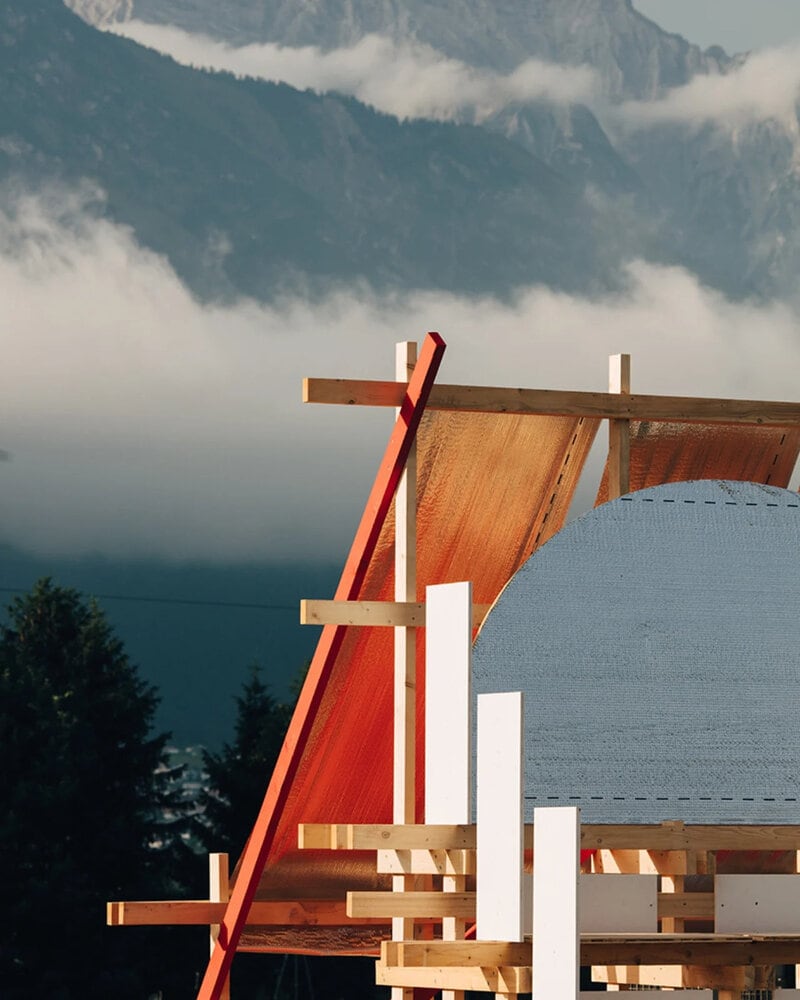
The Gabonsa Pavilion is a 16-square-meter temporary structure created by architecture students from Hochschule Kaiserslautern University of Applied Sciences in collaboration with Innsbruck-based collectives Gans Anders and Bonanza. Installed at the Gabonsa Music Festival in Innsbruck, Austria, the pavilion occupies a small hill between the main stage and workshop area, functioning as seating, a viewing platform and a communal meeting point. Its hybrid design combines elements of furniture, installation and architecture while responding to the site's history as a former municipal landfill.
The structure is assembled from four-meter timber beams joined with screw connections that allow the pavilion to be disassembled and the materials reused after the festival. A semicircular reflective construction foil element mirrors the surrounding landscape, while an aluminum vapour barrier canopy provides shade above an orange construction safety net repurposed as a hammock. Red-painted structural bracing highlights the engineering system.
Image Credit: Hochschule Kaiserslautern University of Applied Sciences
Why This Trend Is Growing
- Reusable Festival Architecture
- Temporary event structures built with modular timber and reversible connections create new value through reduced waste, lower build costs and adaptable post-event reuse.
- Hybrid Social Installations
- Furniture, public art and micro-architecture are converging into multifunctional gathering spaces that turn small festival sites into immersive community hubs.
- Repurposed Construction Materials
- Industrial foils, safety nets and vapour barriers are gaining creative relevance as low-cost design elements with sustainability and visual-impact advantages.
Industries Being Reshaped
- Event Design
- Music festivals and cultural gatherings are becoming testbeds for circular infrastructure that enhances audience experience while minimizing single-use installations.
- Architecture
- Academic and collaborative design studios are reshaping temporary architecture with lightweight assemblies, visible engineering and reuse-focused material systems.
- Sustainable Materials
- The demand for adaptable timber, reclaimed industrial products and disassemblable components points to new material markets serving pop-up and seasonal environments.