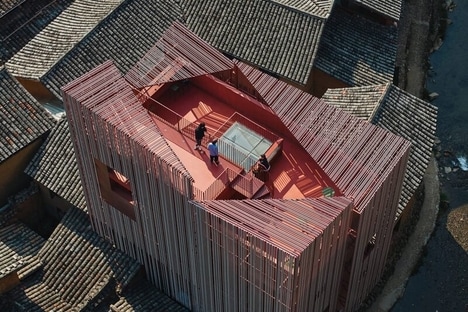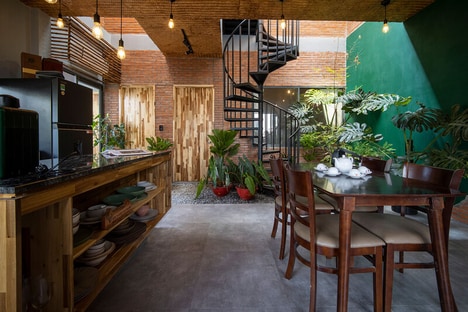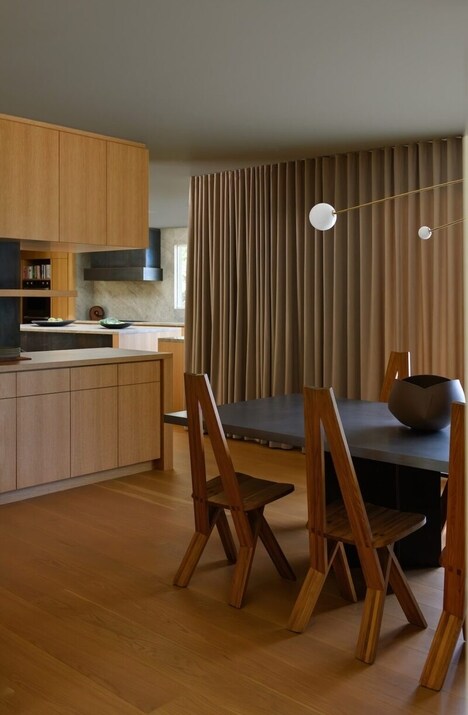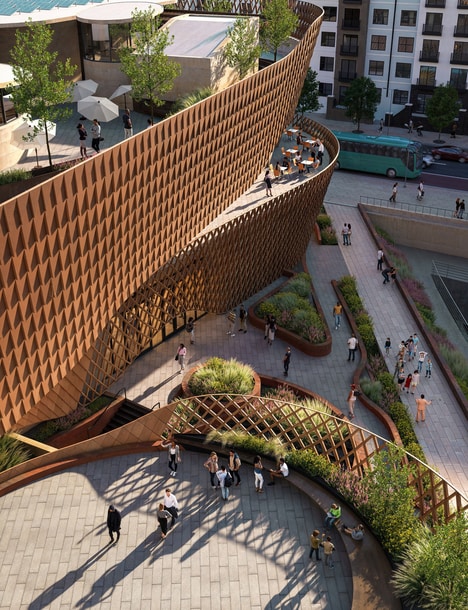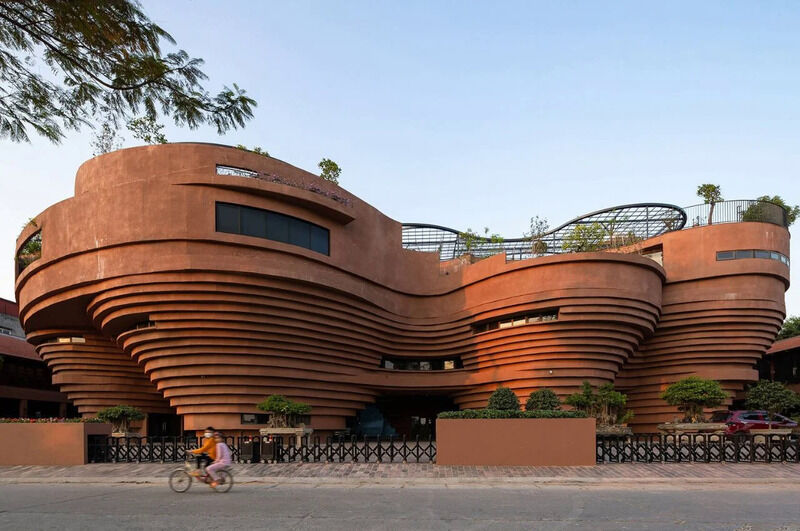
1+1>2 Architects designs the Bat Trang Pottery Museum in the center of Bat Trang village in Vietnam. It is a hub where the blend of pottery and ceramic thrive dating back to the 11th century. The museum is not only a place to display artistic work but is also an architectural embodiment of the village and its dynamic identity.
The Bat Trang Pottery Museum is a poetic representation of local traditions. When creating the building, architects consulted with pottery experts, villagers, and local artisans to create a collaborative design journey and remain mindful. This way, the team ensured that the true cultural identity was captured. The result is a tiered structure representing a canyon-style design to reference the traditional kilns made from brick.
Image Credit: 1+1>2 Architects
What Makes This Trend Stand Out
- Collaborative Design Journey
- Architects consult with pottery experts, villagers, and local artisans to create a collaborative design journey in the Bat Trang Pottery Museum, capturing the true cultural identity.
- Poetic Representation of Local Traditions
- The Bat Trang Pottery Museum is a poetic representation of local traditions, blending pottery and ceramic in a tiered structure reminiscent of traditional kilns.
- Architectural Embodiment of Village Identity
- The Bat Trang Pottery Museum not only displays artistic work but is also an architectural embodiment of the village and its dynamic identity.
Sectors Adopting This
- Art and Design
- The Bat Trang Pottery Museum showcases the collaborative design journey, poetic representation of local traditions, and architectural embodiment of village identity in the art and design industry.
- Tourism and Hospitality
- The Bat Trang Pottery Museum acts as a cultural attraction, drawing tourists to experience the collaborative design journey, poetic representation of local traditions, and architectural embodiment of village identity.
- Cultural Preservation
- The Bat Trang Pottery Museum contributes to cultural preservation by showcasing the collaborative design journey, poetic representation of local traditions, and architectural embodiment of village identity.