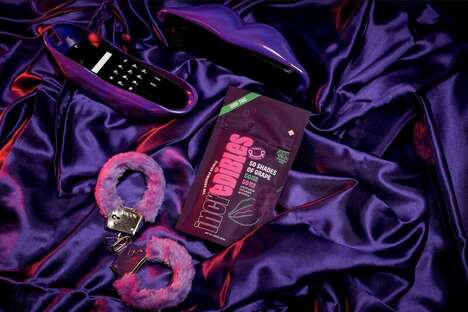
Bryan Regan's '50 Shades of Food' series is the latest spoof to take advantage of E.L. James' erotic novel and the soon-to-be-released film adaptation.
The books and film have taken the once-taboo concept of BDSM (Bondage/Discipline, Dominance/Submission, Sadism/Masochism) and watered it down for the mainstream public. What was once unthinkable to even mention, is now casual dinnertime conversation.
Regan's series takes things to a whole other level, as he photographs edible items in bondage-style restraints and mock-torture scenarios that mimic authentic BDSM practices. Bet you never thought you'd see a lemon in nipple clamps, or a pineapple wearing a dildo, did you? How about a donut paired with a butt plug? Yeah. While Regan's series is amusing, it also seeks to illustrate the liminal space BDSM occupies in our culture: not quite out of the taboo forest, but not entirely front-and-mainstream, either.
Key Themes Behind This Trend
- Mainstreaming Taboo
- There is an opportunity to explore and capitalize on the growing acceptance and integration of formerly taboo topics into mainstream culture.
- Humor in Controversy
- Funny and irreverent spoofs can be created to address controversial topics in a lighthearted way, offering entertainment and commentary simultaneously.
- Pushing Boundaries Through Art
- Artistic expressions that challenge societal norms and provoke conversations can lead to innovative and disruptive ideas.
Where This Applies
- Art and Photography
- The intersection of art and photography presents opportunities to create visually provocative and thought-provoking pieces that push boundaries.
- Entertainment and Media
- The entertainment and media industries can explore the potential for humor and satire in tackling controversial or taboo subjects.
- Food and Beverage
- There is room for disruptive and unconventional marketing approaches within the food and beverage industry that cater to the evolving tastes and interests of consumers.