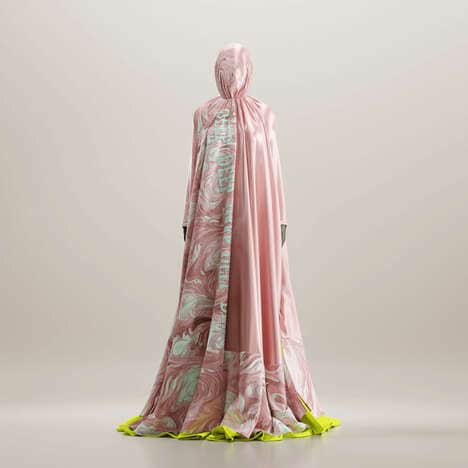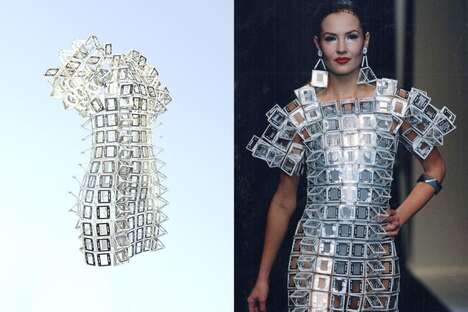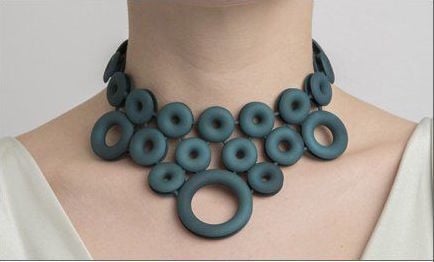


3D-printed clothing gives designers the freedom to tailor the details of every garment to the wearer—however, these garments often sit on the body in a way that's sculpturally beautiful, albeit stiff and unlike most soft fabrics. 'Modeclix' is a project that introduces a new line of dresses that are not only customizable, but highly comfortable and truly wearable.
Prototypes for the 3D-printed dresses reinterpret weaving, knitting and other intricate stitches in order to create a fabric that's flexible, movable and mimics traditional cloth garments.
In total, there are eight dresses in the collection that are designed to be figure-flattering for women of all shapes and sizes. The Modeclix dresses will make their debut in April at this year's Mercedes-Benz Bokeh South Africa International Fashion Film Festival.
Why This Trend Is Growing
- 3d-printed Clothing
- The fashion industry can leverage 3D printing technology to create customizable, wearable and comfortable clothing.
- Soft 3D Printing
- Soft 3D printing technology provides opportunities for creating wearable designs that mimic traditional cloth garments.
- Custom-fitting Clothing
- Custom-fitting clothing can be achieved through 3D printing technology, enabling mass personalization and reducing waste in the fashion industry.
Industries Being Reshaped
- Fashion Design
- 3D printing technology can revolutionize the fashion design industry by providing new possibilities for creation and customization.
- Textile Manufacturing
- The textile manufacturing industry can benefit from soft 3D printing technology by expanding their design options and improving product quality.
- 3D Printing Services
- The emergence of 3D printing technology in the fashion industry presents opportunities for 3D printing service providers to expand their offerings and capture a new market.