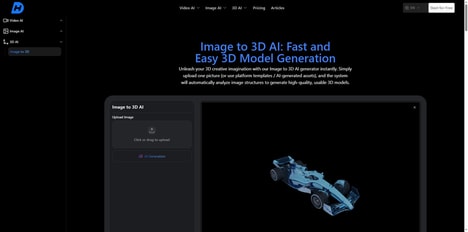
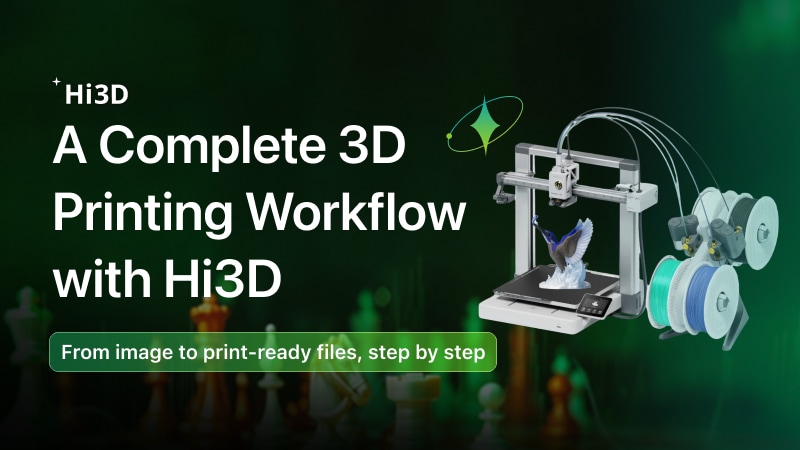
Hi3D introduced an end-to-end AI 3D printing workflow that converts a text prompt into a printable 3MF project in about five minutes. The platform combines Nano-Banana image generation with the Sparc3D reconstruction engine, featuring Multi-View Mode for consistent perspectives and automated mesh repair to produce watertight, manufacturing-ready models. The system exports finished projects directly to popular slicers through enhanced 3MF files.
Hi3D automates the traditionally manual stages of concept art, 3D reconstruction, logical part splitting, connector generation and press-fit tolerance calculations based on printer settings, along with build-plate optimization. Users can choose fixed or ball-joint connectors and receive models divided into two to six printable sections with print orientation and time estimates included.
For hobbyists and collectors, Hi3D compresses hours of CAD work and model preparation into minutes, reflecting the growing role of AI in streamlining maker workflows.
Image Credit: Hi3D
Part of the cluster
Creative Copilots
Generative AI is being packaged as editable support for creative production
Explore the cluster

What Makes This Trend Stand Out
- Prompt-to-print Workflows
- Text-based model generation is collapsing concept design, reconstruction and print preparation into a single rapid workflow for creators and product teams.
- Automated Mesh Optimization
- AI-driven repair, splitting and tolerance calculation introduces new potential for reducing failed prints and minimizing specialized CAD expertise.
- Connected Slicer Integration
- Enhanced 3MF exports that move directly into popular slicers signal a more interoperable future for distributed manufacturing ecosystems.
Sectors Adopting This
- Additive Manufacturing
- End-to-end AI preparation tools are reshaping how printable parts are designed, validated and produced across consumer and professional use cases.
- Hobbyist Collectibles
- Rapid conversion of prompts into multipart printable models creates fresh possibilities for personalized figurines, props and limited-run collectibles.
- Design Software
- Generative 3D workflows are expanding design platforms beyond manual modeling toward automated, manufacturing-ready asset creation.