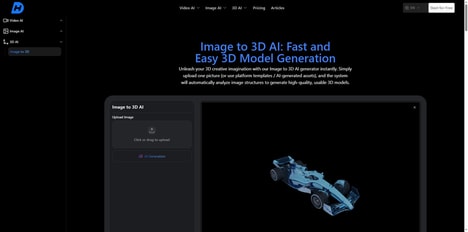
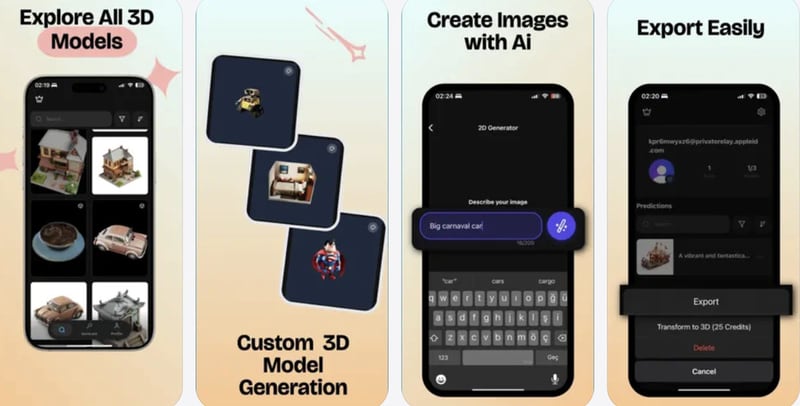
Modelify is an AI-powered tool that converts two-dimensional images into detailed 3D models. By analyzing visual data from photos, the platform generates depth, structure, and spatial detail to produce export-ready 3D assets. This process, which traditionally required specialized software and manual modeling, is automated to deliver results in seconds.
From a business perspective, Modelify highlights the increasing role of AI in accelerating creative and design workflows. It can support industries such as e-commerce, gaming, architecture, and digital content production by reducing the time and expertise needed to create 3D visuals. The ability to quickly generate models from existing images may also lower production costs and enable rapid prototyping. As demand for immersive and interactive content grows, tools like Modelify demonstrate how AI is reshaping digital asset creation.
Image Credit: Modelify
What Makes This Trend Stand Out
- Instant 3D Generation
- Rapid conversion of 2D photos into detailed 3D models compresses production timelines and enables scalable asset libraries.
- Image-to-asset Automation
- Automating the translation from images to export-ready assets reduces reliance on specialized modeling skills and lowers content creation costs.
- AI-accelerated Prototyping
- Real-time model generation accelerates iterative design cycles and supports virtual testing of form and fit earlier in development.
Sectors Adopting This
- E-commerce
- Rapid creation of product 3D models fosters immersive shopping experiences and reduces the cost of producing interactive catalogs.
- Gaming and Interactive Entertainment
- Access to instant, high-quality 3D assets shortens level design and content pipelines while enabling more personalized in-game items.
- Architecture and Construction
- Photograph-to-model conversion supports faster site visualization and preliminary spatial analysis without extensive manual modeling.