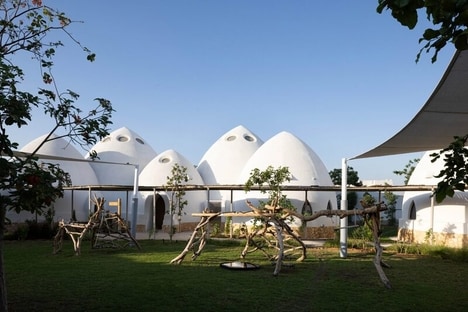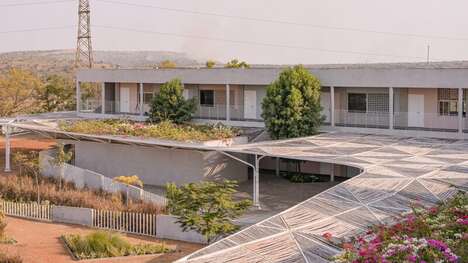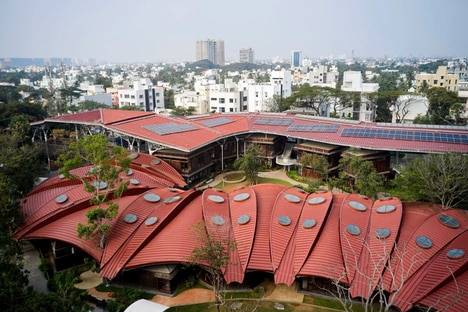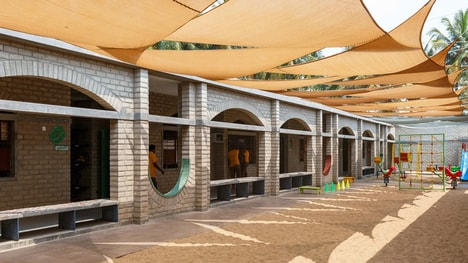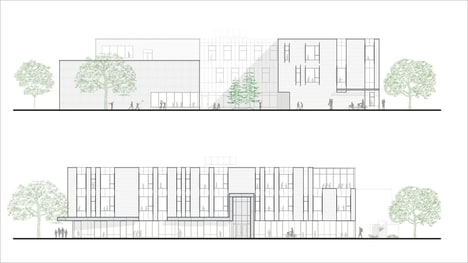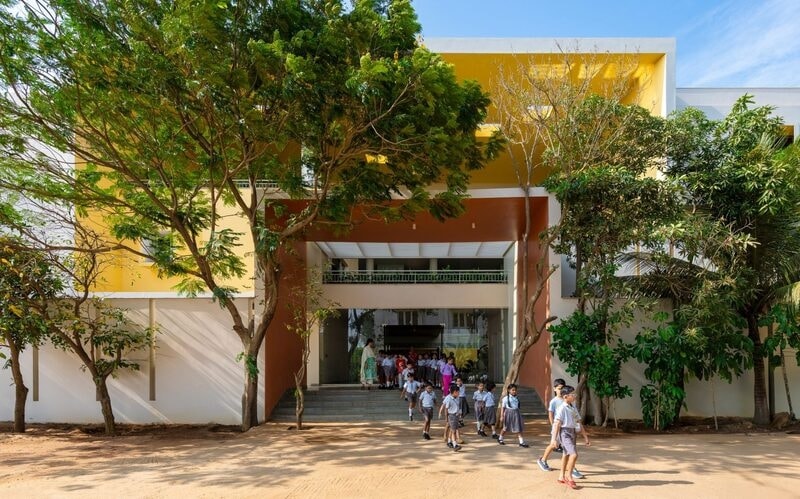
The Rainbow International School, expanded by Spacefiction Studio in Nellore, India, adapts a traditional educational model into a dynamic, nature-integrated environment. The three-story extension aligns east to west to reduce heat gain, and its central atrium, bathed in daylight from overhead skylights, anchors circulation between shaded wings while nurturing a learning atmosphere infused with greenery.
Every classroom opens into double-height courtyards or covered outdoor zones, dissolving physical boundaries and echoing India’s ancient gurukul tradition of harmonious, informal instruction. Materials like locally sourced Kota stone and sliding aluminum doors reference regional climate and craftsmanship, while transitional spaces, often overlooked, come alive as spontaneous learning and social zones. This thoughtful integration of natural light, climate response, and flexible space shifts the idea of institutional education into fluid, collective creativity rooted in environmental and cultural continuity.
Image Credit: Vivek Eadera
What's Driving This Trend
- Nature-infused Learning Environments
- Educational spaces are being reimagined as nature-integrated areas, fostering creativity and well-being through natural light and greenery.
- Flexible Educational Spaces
- Shifting to adaptable learning environments allows schools to create multifunctional areas that encourage collective and spontaneous educational and social interactions.
- Climate-responsive Architecture
- Incorporating climate-specific materials and design reduces energy consumption while aligning educational spaces with regional environmental conditions.
Who This Affects Most
- Educational Architecture
- Architectural firms are enhancing schools with innovative designs that blend traditional educational models with nature and flexibility to create modern learning spaces.
- Sustainable Building Materials
- The emphasis on locally sourced and environmentally responsible materials in school projects supports sustainability and regional craftsmanship.
- Smart Building Innovation
- Integrating smart design elements that adapt to environmental conditions in educational buildings opens avenues for eco-friendly construction.