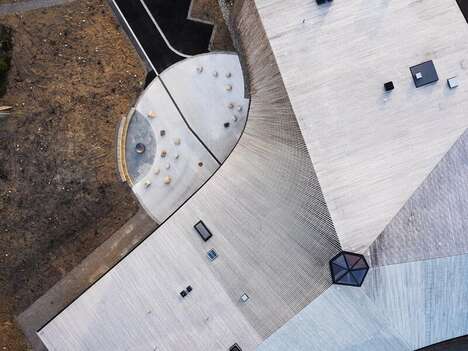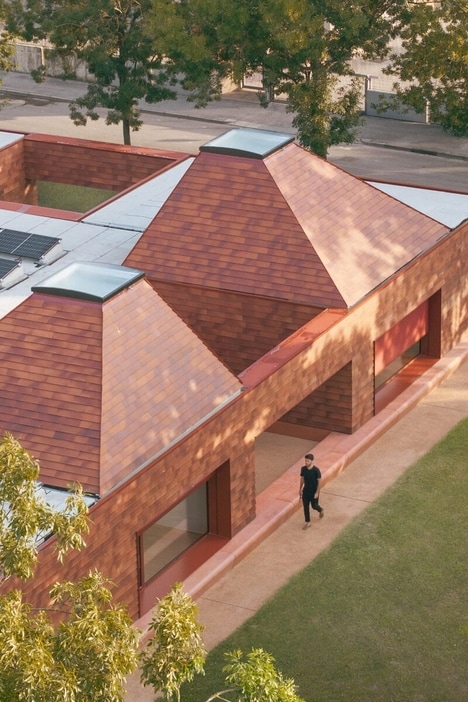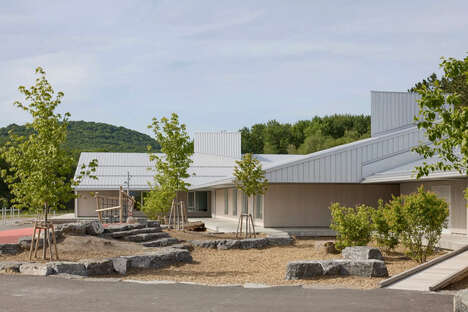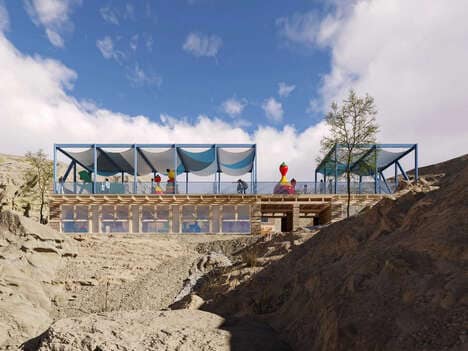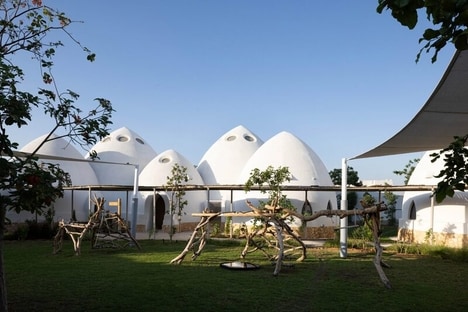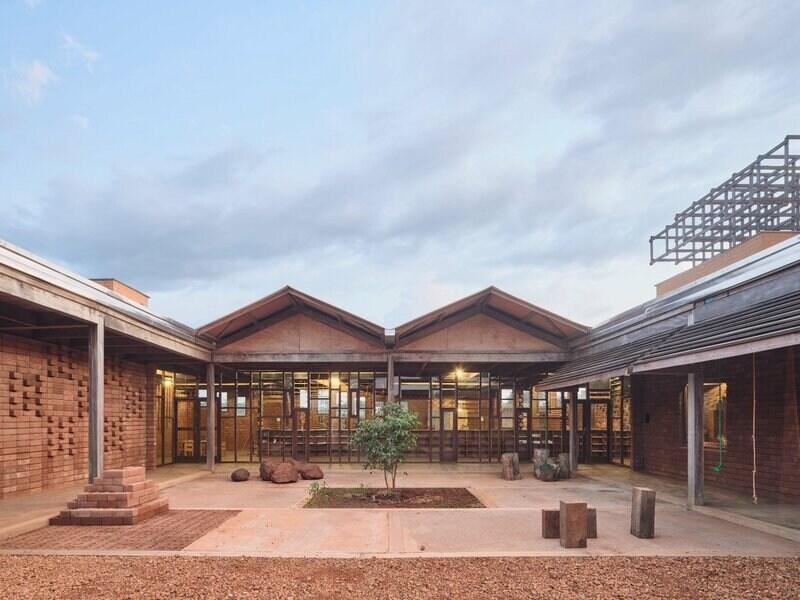
The African Flow School by Urbanitree is a kindergarten in Soa near Yaoundé, Cameroon that integrates ancestral architecture, land, and craft into early childhood education. Covering 1,600 square metres, the school connects indoor and outdoor learning through four themed ecosystems called Mountain, Savanna, Village, and Forest, each shaped by symbolism and function. The layout centres on a courtyard and corridor system that allows children to move fluidly between shared and focused spaces without fixed classrooms.
Local materials and low-tech construction methods play a central role. Walls of unfired rammed earth bricks filter light and regulate temperature, while azobé wood resists termites and hardwoods like iroko and sapele bring warmth to interiors. A wooden water tower with photovoltaic panels supports utilities. Built through community collaboration and training, the African Flow School demonstrates how education can be enriched when architecture reflects culture, ecology, and local resources.
Image Credit: Adrià Goula
Key Themes Behind This Trend
- Ancestral Architecture in Education
- Education spaces are being designed with ancestral architectural elements, allowing cultural heritage to enrich learning environments and connect students with traditional craftsmanship.
- Sustainable Construction Materials
- Buildings that utilize local, unfired materials like rammed earth bricks are setting new standards for sustainable construction, reducing environmental impact while leveraging indigenous resources.
- Ecosystem-themed Learning Environments
- By designing schools around themed ecosystems, educators can enhance learning experiences through interactive and symbolic spatial arrangements that blend nature with pedagogy.
Where This Applies
- Eco-friendly Architecture
- As more buildings incorporate eco-friendly materials and methods, the architecture industry can drive innovation by prioritizing sustainability and local resource utilization.
- Early Childhood Education
- Early childhood education industries are transforming by integrating culturally inspired and nature-driven environments to foster holistic learning and development.
- Renewable Energy Solutions
- Industries focused on renewable energy are expanding their influence by integrating energy-efficient utilities like photovoltaic panels into architectural designs.