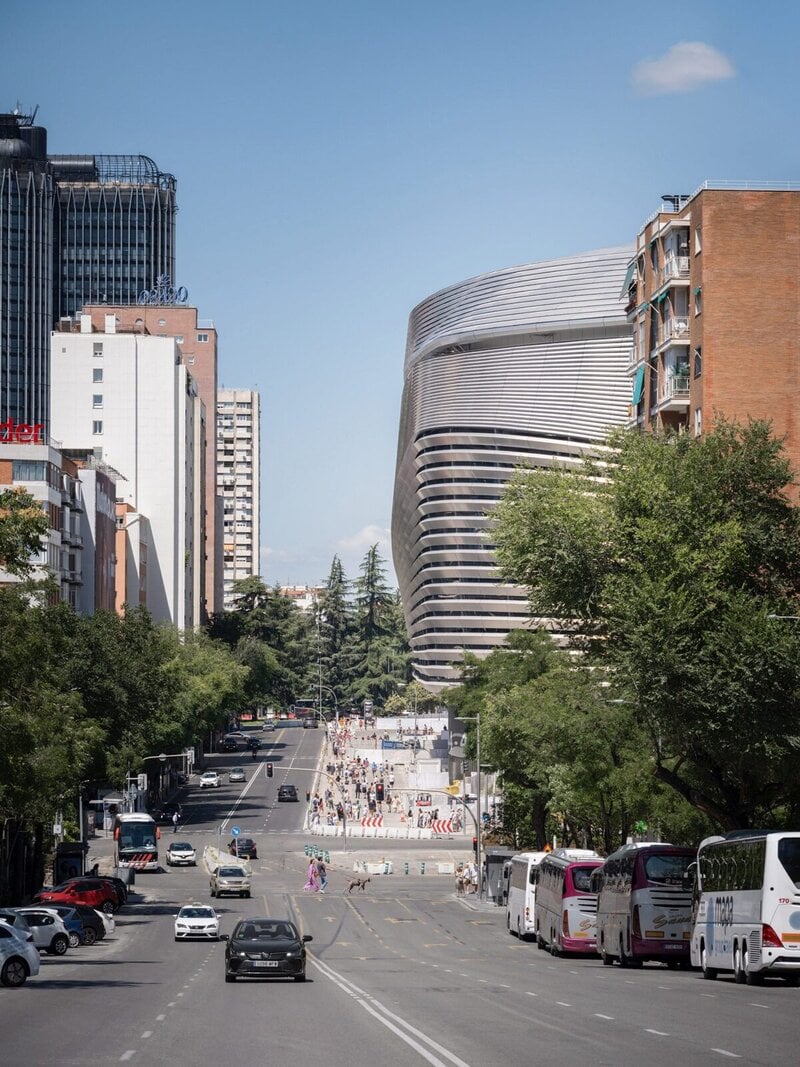
The Estadio Santiago Bernabéu renovation transforms Real Madrid's historic stadium into a flexible, year-round destination while preserving its original structure. Led by GMP Architekten with L35 and Ribas & Ribas, the €1 billion project retains the nearly 80-year-old stadium while introducing a stainless steel louvred façade, retractable roof and upgraded visitor facilities. The redesign extends the building's lifespan by adapting it for sporting events, concerts and daily public use, supporting a wider range of commercial and cultural activities.
A key feature of the renovation is the retractable pitch, which is stored in an underground greenhouse due to the constrained urban site surrounding the stadium. Additional attractions include an expanded museum, restaurants, retail spaces and the Bernabéu Market, allowing the venue to operate beyond match days. The upgraded stadium balances heritage preservation with modern infrastructure while increasing flexibility for future events.
Image Credit: Marcus Bredt
Key Themes Behind This Trend
- Adaptive Stadium Design
- Flexible architecture is turning legacy venues into multipurpose destinations that support sports, entertainment, retail, and cultural programming throughout the year.
- Retractable Venue Infrastructure
- Advanced systems such as movable roofs and underground pitch storage are expanding how dense urban stadiums can host varied events without requiring new land.
- Heritage-led Modernization
- Historic sports venues are being reimagined with contemporary amenities and commercial spaces while retaining cultural identity and architectural continuity.
Where This Applies
- Sports and Entertainment
- Multipurpose stadium upgrades are creating new revenue models through concerts, exhibitions, hospitality, and immersive fan experiences beyond game days.
- Architecture and Construction
- Large-scale renovation projects are advancing demand for adaptable building systems, façade innovation, and complex engineering within constrained urban sites.
- Travel and Hospitality
- Stadiums with museums, restaurants, markets, and public attractions are becoming tourism anchors that blend local culture with year-round visitor engagement.