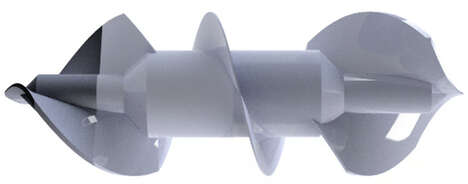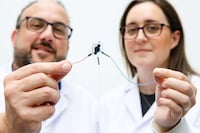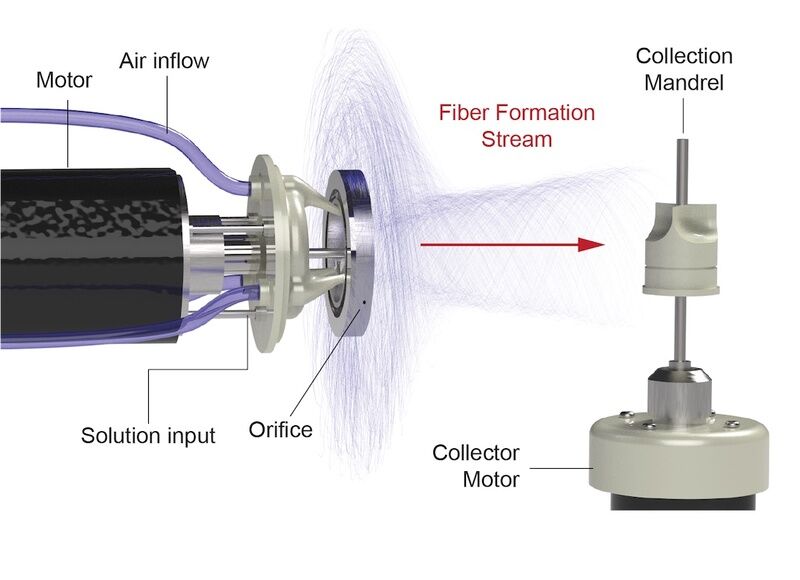
The Wyss Institute at Harvard University's team along with the John A. Paulson School of Engineering and Applied Sciences have been working on a way to create an artificial heart valve. The key is to use a FibraValve technique based on rotary jet spinning. This adds streams of air to pick up synthetic fibers and the team slowly focuses on creating the valve's shape to a precise dimension.
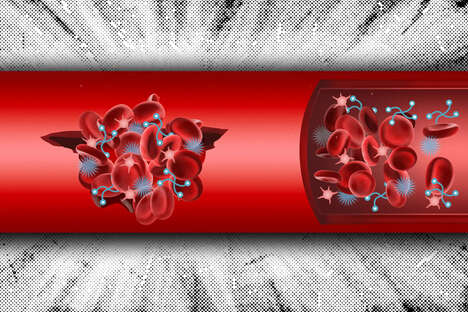
This combats Valvular Heart Disease, which is a condition that prevents the organ from distributing blood flow efficiently through the body. By doing this and applying it properly, it could grow naturally with the body. Co-author Kevin 'Kit' Parker notes in a press release that “Our goal is for the patient’s native cells to use the device as a blueprint to regenerate their own living valve tissue."
Image Credit: Wyss Institute at Harvard University
Why This Trend Is Growing
- Artificial Heart Valves
- The development of synthetic fiber heart valves presents an opportunity for disruptive innovation in the field of cardiac surgery and medical devices.
- Fibravalve Technique
- The FibraValve technique of using rotary jet spinning to create artificial heart valves offers a disruptive innovation opportunity in advanced manufacturing and bioengineering.
- Regenerative Medicine
- The use of synthetic fiber heart valves that can be grown naturally with the body opens up new avenues for disruptive innovation in regenerative medicine and tissue engineering.
Industries Being Reshaped
- Cardiac Surgery
- The development of synthetic fiber heart valves has the potential to disrupt the cardiac surgery industry by providing more effective and durable solutions for patients with valvular heart disease.
- Medical Devices
- The FibraValve technique for creating artificial heart valves has the potential to disrupt the medical devices industry by introducing advanced manufacturing methods and innovative materials.
- Biotechnology
- The integration of synthetic fibers in heart valves and the potential for regenerative medicine applications create disruptive innovation opportunities in the biotechnology industry for tissue engineering and organ regeneration.