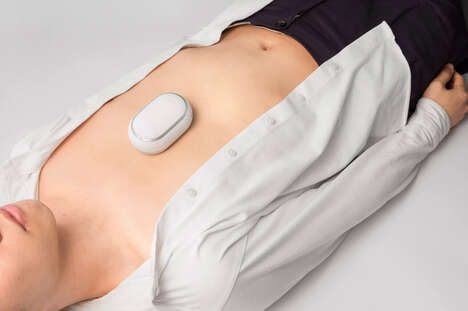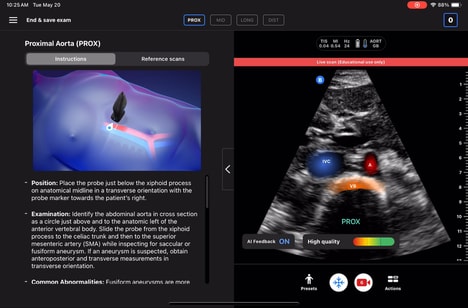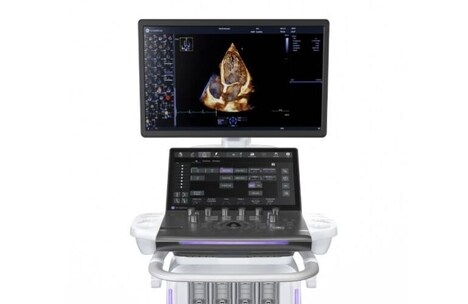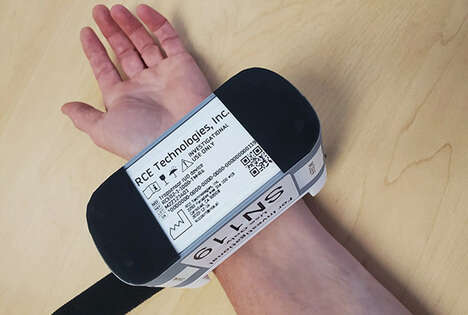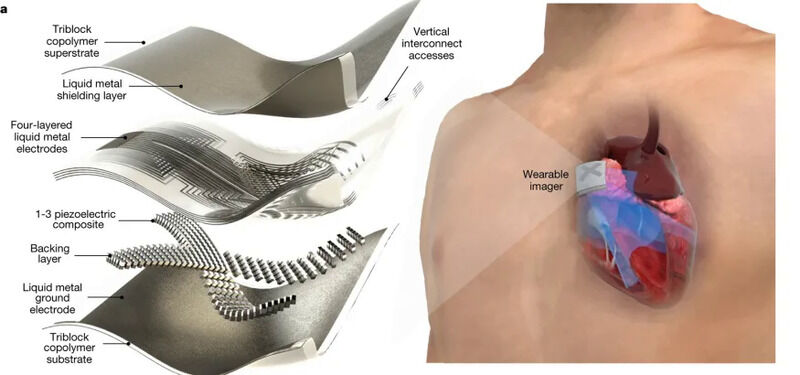
Researchers have developed a new way to scan the heart in real time with the latest wearable ultra-scan patch. This helps capture detailed images of the heart in a more seamless way while in motion as well. An additional feature of the patch is that it uses deep learning to calculate ventricle volume automatically in order to generate performance statistics.
This way, users will know their own cardiac output at any given point in time. The device uses piezoelectric transducers, which are powered by pressure to perform deep tissue imaging. The stretchable liquid metal electrodes ensure that the imager can stay close to the skin while staying compact as well. However, it is not yet in production as scientists are still miniaturizing the system.
Image Credit: Hu, Huang, Li et. al.
Key Themes Behind This Trend
- Wearable Ultrasound Technology
- There is an opportunity for ultrasonic technology companies to develop wearable devices with real-time imaging capabilities.
- AI-enabled Healthcare Devices
- Incorporating artificial intelligence into healthcare devices can allow for automatic processing of medical data and generate valuable performance statistics.
- Miniature Medical Devices
- There is a need for smaller and more compact medical devices that can still offer high-quality imaging and data processing capabilities.
Where This Applies
- Healthcare Technology
- The healthcare technology industry can benefit from incorporating wearable ultrasound patches with real-time imaging capabilities into their products.
- Medical Device Manufacturing
- Medical device manufacturers can explore opportunities to create more compact and efficient devices for medical imaging and data analysis.
- Sports Performance Tracking
- There is potential for the development of wearable devices that can track heart performance during athletic activities for sports performance and training purposes.