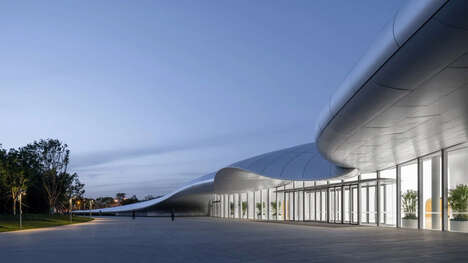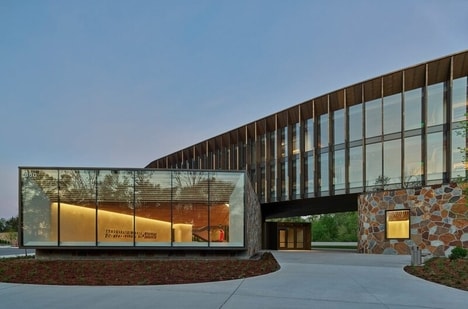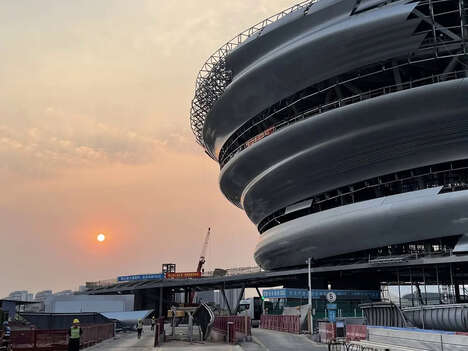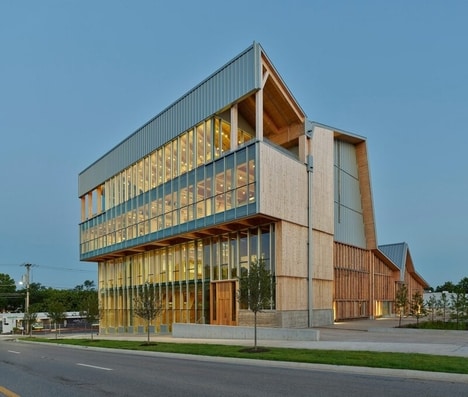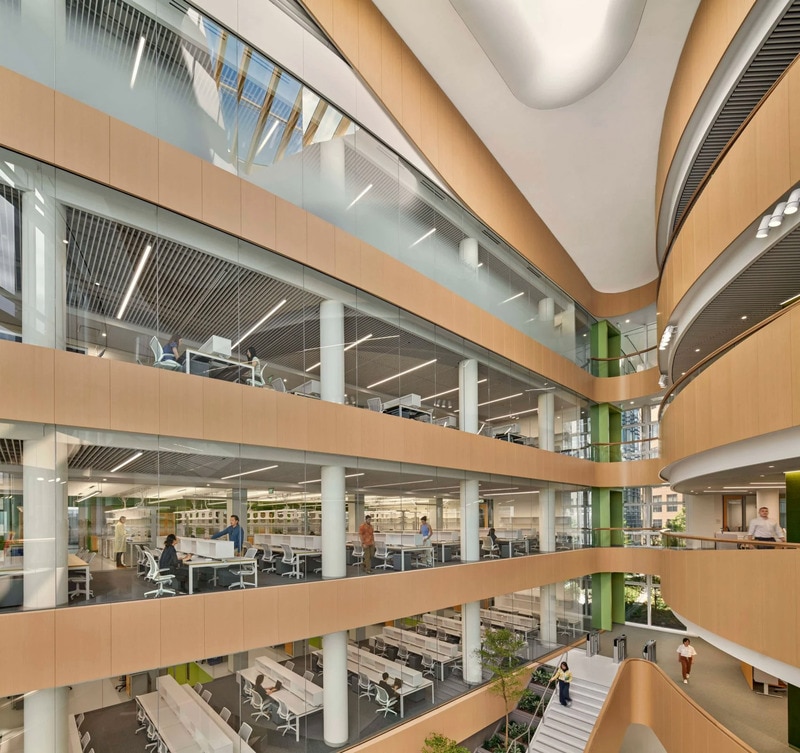
The Ragon Institute functions as a hub that conducts research on infectious diseases including Covid-19. It is deigned by local architecture studio Payette with Mass General, MIT, and Harvard University. The structure boasts a sculptural look with a doughnut shape making up the terrace and topped off by green roofs.
Another standout feature is the research facility made with a V-shaped silhouette. The studio notes more on the design, "The design approach embraced the unusual triangular site as a singular object by floating the mass above a continuous band of landscape on all sides." The team adds, "The building has been elevated above the floodplain, with protective measures for the below-grade garage to mitigate against extreme weather events."
Image Credit: Robert Benson
Key Themes Behind This Trend
- Sculptural Architecture
- Unique architectural designs like the sculptural doughnut shape and V-shaped silhouette are pushing the boundaries of traditional building aesthetics, offering fresh opportunities to create iconic landmarks.
- Green Roof Integration
- The use of green roofs not only provides aesthetic value but also enhances environmental sustainability, paving the way for innovations in eco-friendly building practices.
- Resilient Building Design
- Incorporating elevation and protective measures against extreme weather demonstrates a shift towards resilient building designs, offering advancements in safeguarding infrastructure in flood-prone areas.
Where This Applies
- Infectious Disease Research
- Institutes conducting research on infectious diseases are at the forefront of innovation in global health, driving new methods for prevention and treatment.
- Architectural Design
- The architectural industry is evolving with novel aesthetics and sustainability considerations, heralding a new era of creative and functional building designs.
- Sustainable Construction
- Sustainable construction practices, exemplified by the use of landscape integration and floodplain adaptations, are transforming how buildings can better coexist with environmental challenges.