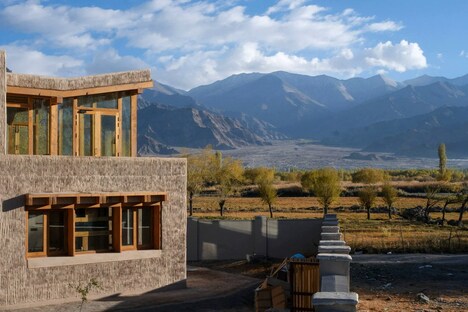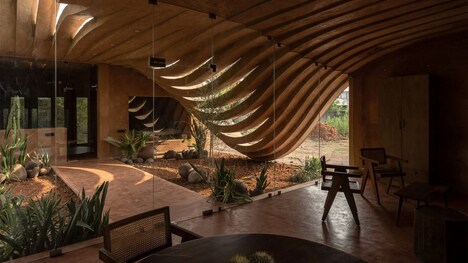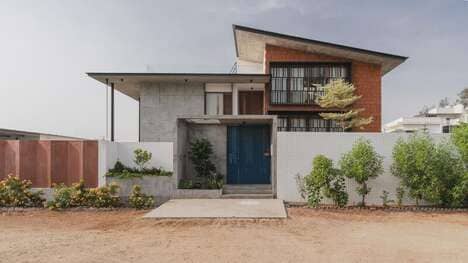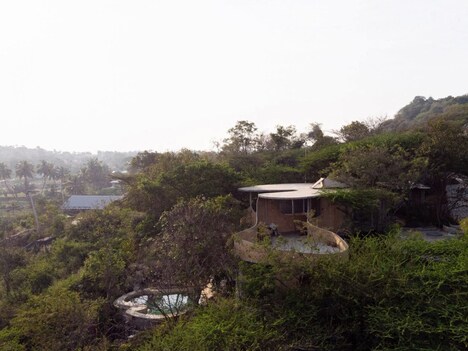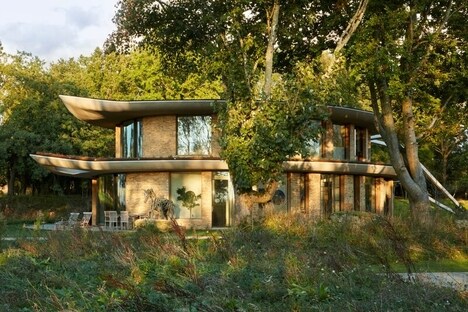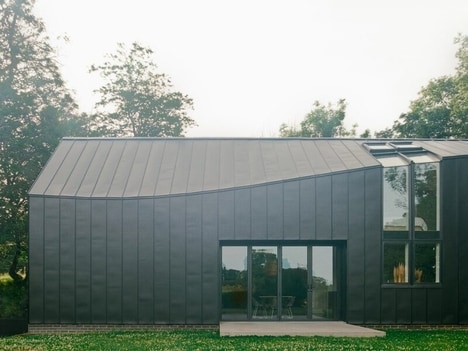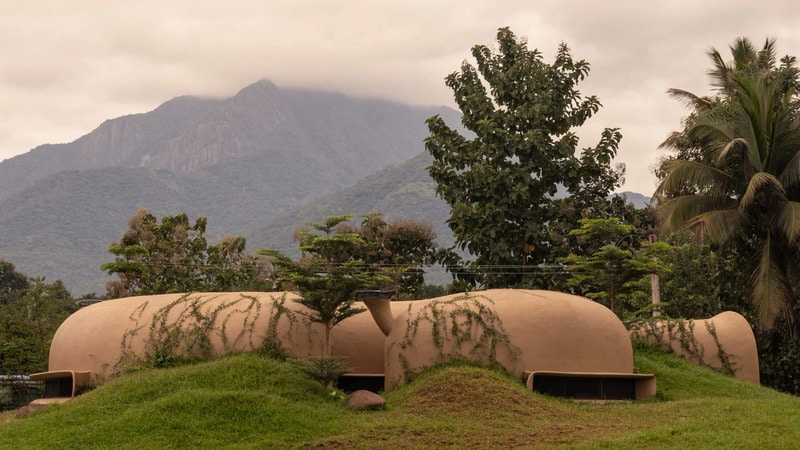
Local architecture firm Earthscape Studio creates the Wild House with a sculptural exterior coated in mud plaster. This forms a dynamic cave-like interior at the farmhouse nestled in Tamil Nadu. The home is created with an organic structure and detailed with natural finishes including a 'thappi' lime plaster which coasts the forrecement shell.
The lead architect Petchimuthu Kennedy spoke to Dezeen, noting "The reason behind the structure was to avoid columns and beams, making a self-sustaining structure that flows in a fluidic form – we call this 'fold architecture.' The farmhouse folds with surprises for each space, bringing curiosity about the spaces. These folds and curves feel like entering a cave giving a wild experience. The windows open to the sylvan view on the outside from the lower level bringing the cold air into the space."
Image Credit: Studio Iksha
What's Driving This Trend
- Fold-architecture Design
- Fold-architecture design emphasizes organic structures without traditional supports, creating opportunities for innovative structural solutions.
- Natural Finish Aesthetics
- Natural finish aesthetics focus on using organic materials like mud plaster and lime to achieve environmentally friendly and visually appealing surfaces.
- Thermal Efficiency Through Design
- Thermal efficiency through design uses fluidic structures and strategic openings to naturally regulate temperatures, highlighting eco-friendly cooling methods.
Who This Affects Most
- Sustainable Architecture
- Sustainable architecture prioritizes energy-efficient and environmentally friendly building methods using organic materials and innovative design concepts.
- Eco-friendly Construction Materials
- Eco-friendly construction materials explore the use of natural elements such as mud plaster and lime to replace synthetic alternatives in building processes.
- Resort and Hospitality Design
- Resort and hospitality design leverages nature-inspired, cave-like structures to offer guests an immersive environment, enhancing the experience.