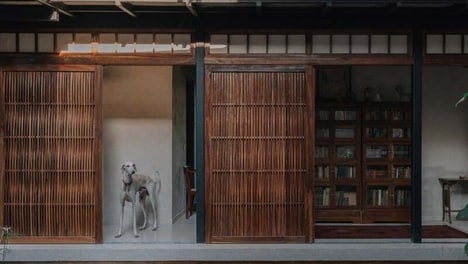
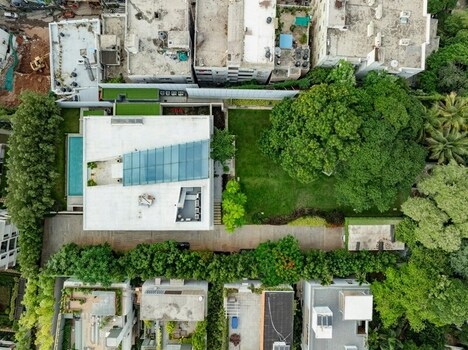
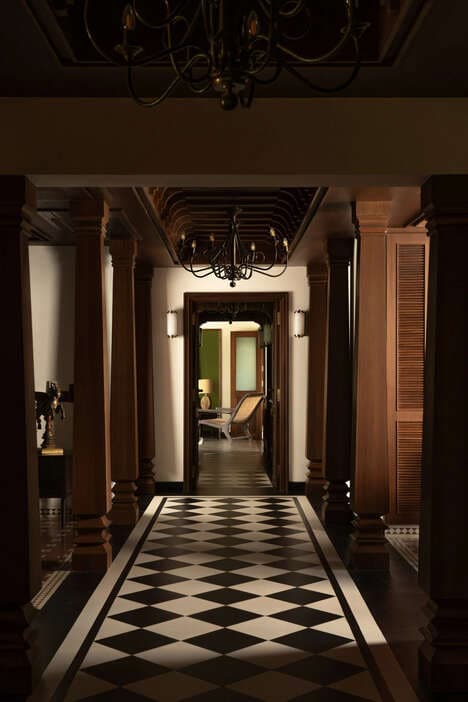
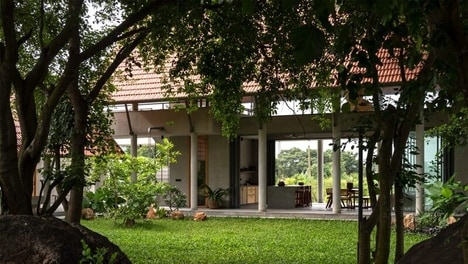
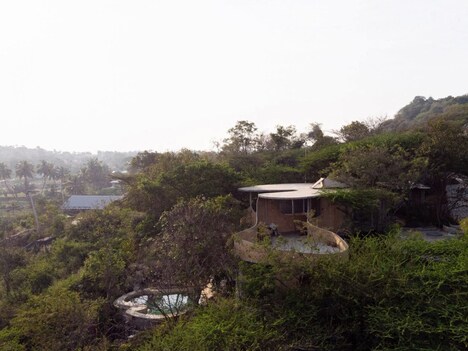
Indian design firm Field Architects has designed the Gulzar's Residence, named after its client, who is a notable naturalist and conservationist. The home is nestled on a site full of trees in the village of Chuchot. The home is defined by its Adobe walls and textured plaster paired with wooden window frames, which brings a sense of artisanal charm.
Co-founder of Field Architects, Faiza Khan notes, "Considering Gulzar's affection for outdoors, the design responds with visual connectivity and a fluid extension of the spaces into the landscape, adapting his vision of modern living into a functional Ladakhi home. This approach has allowed us to deconstruct the vernacular architecture and create a contemporary home that is truly rooted in its place."
Image Credit: Pia Sodhi
What's Driving This Trend
- Sustainable Vernacular Architecture
- By integrating traditional building methods with modern aesthetics, there's a growing interest in creating homes that are environmentally friendly and culturally cohesive.
- Textured Plaster Revival
- The renaissance of textured plaster provides an opportunity for blending tactile materials with modern design, appealing to both ecological and stylistic considerations.
- Nature-integrated Living Spaces
- Architectural designs that extend physical and visual spaces into natural landscapes are increasingly sought after for their promoting of wellness and sustainable living.
Who This Affects Most
- Eco-friendly Construction
- Emergent techniques that focus on sustainable materials and designs are transforming how modern homes minimize their environmental impact.
- Artisanal Interior Design
- There's a growing market for bespoke design elements, such as customized plasters and handcrafted fixtures, offering unique solutions for personalizing spaces.
- Landscape Architecture
- This industry is seeing increased demand for innovative designs that seamlessly integrate indoor living with surrounding landscapes, creating a cohesive natural experience.