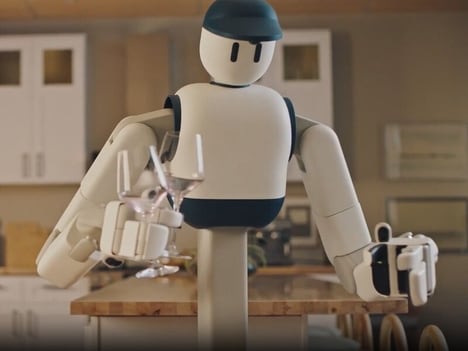
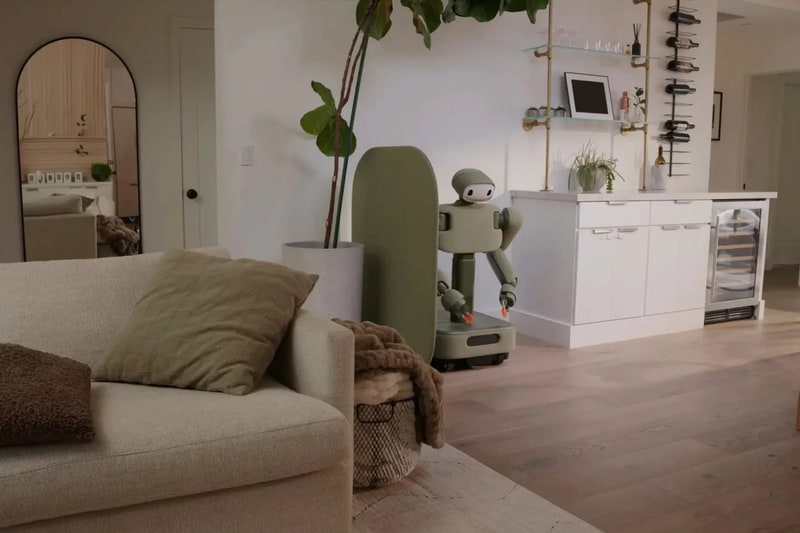
The Weave Robotics Isaac 1 home robot has been formally announced by the brand as its latest solution for a living space that's engineered to tackle an array of tasks. The robot sits on a motorized base that will carefully navigate the home where it can go to work tidying up, making beds and even folding clothes. The torso of the robot is finished with fabric, which extends to the arms and head to give the unit a decor-led design that will more organically blend in with the surfaces in the home.
The Weave Robotics Isaac 1 home robot can automatically extend its height from three-feet to five-foot-nine-inches to match a variety of different tasks. The robot will retail for $8,000 or $449 per month on a subscription plan and is slated to start shipping this fall.
Image Credit: Weave Robotics
What Makes This Trend Stand Out
- Decor-blended Robotics
- Fabric-wrapped forms and furniture-like finishes signal a shift toward domestic robots that function as both appliances and integrated interior design elements.
- Subscription Home Automation
- Monthly pricing models make advanced household robotics more accessible while creating recurring-service ecosystems around maintenance, upgrades and task expansion.
- Adaptive Chore Robotics
- Height-adjustable bodies and mobile manipulation capabilities point to a new class of home assistants built for varied physical tasks across bedrooms, laundry areas and living spaces.
Sectors Adopting This
- Consumer Robotics
- Premium multifunction robots are redefining the category through human-scale mobility, soft aesthetics and practical domestic utility beyond novelty automation.
- Smart Home Technology
- Connected living platforms gain new relevance as task-performing robots become physical extensions of home intelligence systems.
- Home Furnishings
- Interior-focused robotics introduces crossover potential between decor brands, textile manufacturers and automation companies seeking products that visually belong in residential environments.