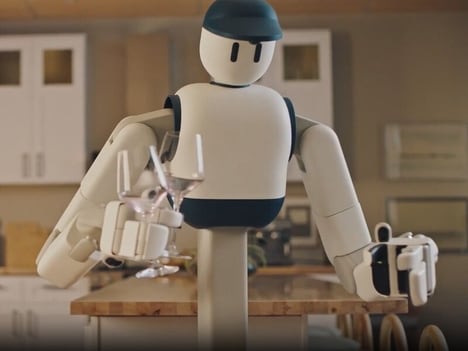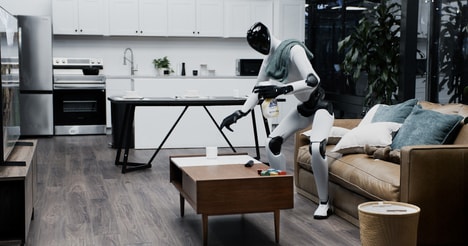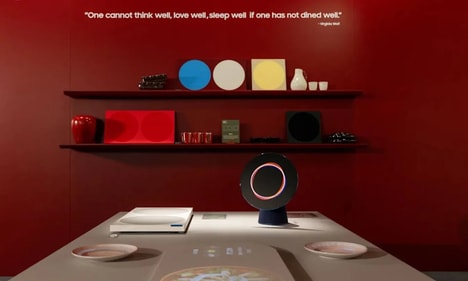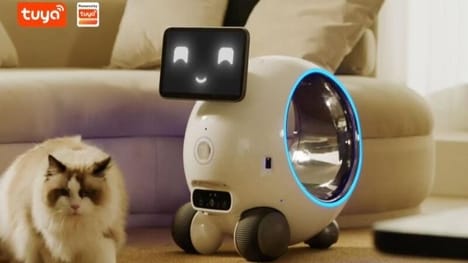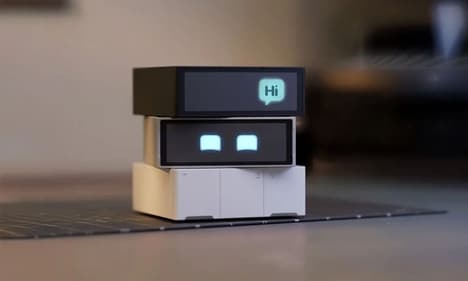

The Futurewave 'Furny' home robot has been designed by the Brussels-based studio as a solution that imagines a new kind of profile and interaction level for living space technology. The robot prioritizes an avoidance of screens and voice interaction, and communicates with users through movement and physical posture to prevent it from causing additional digital noise in the household. The robot also distinctly avoids the humanoid design to help make it an inviting addition to a home rather than something that could cause discomfort with its human operators.
The conceptual Futurewave 'Furny' home robot maintains its furniture-like design to blend seamlessly in with soft furniture finishings and thus prevent it from being a potential eyesore in the average home.
Why This Trend Is Growing
- Ambient Home Robotics
- Robots that use posture and movement instead of voices or displays create space for calmer household automation that blends into daily routines.
- Screenless Robot Interfaces
- Nonverbal interaction models point to new product categories where physical behavior replaces apps, speakers, and screens as the main user interface.
- Furniture-integrated Technology
- Soft, furniture-like robotic forms signal demand for connected devices that disappear into home decor while still delivering practical utility.
Industries Being Reshaped
- Consumer Robotics
- Household robot makers have an opening to differentiate through emotional comfort, subtle design, and low-distraction functionality rather than humanoid features.
- Smart Home
- The shift toward quiet, embodied technology expands the smart home beyond voice assistants and dashboards into more intuitive environmental interactions.
- Furniture Manufacturing
- Furniture brands could intersect with robotics through modular, sensor-enabled pieces that preserve aesthetic harmony while adding responsive household capabilities.