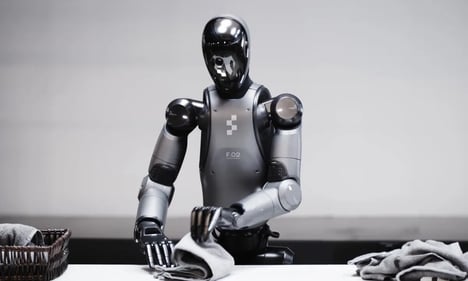
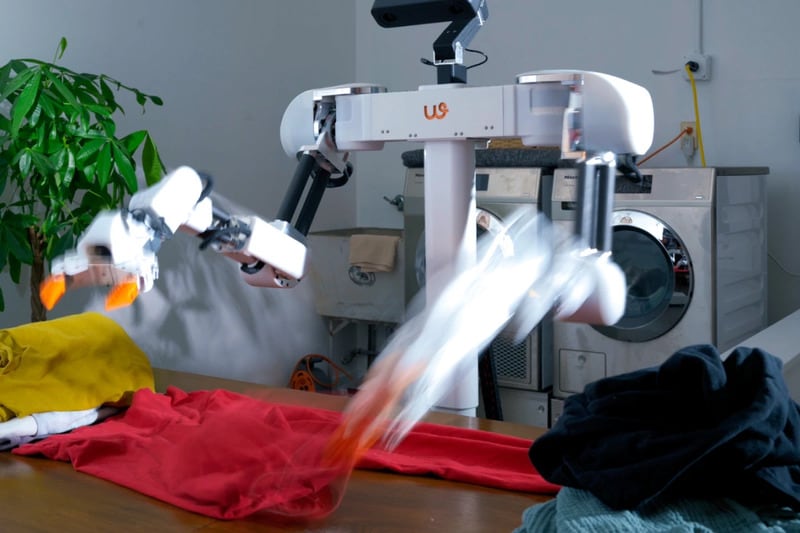
Weave Robotics introduced Isaac 0, a tabletop laundry-folding robot designed to automate clothes folding for homes, featuring a stationary base, swiveling cameras and articulated arms. Launched as an early-release prototype, Isaac 0 works in a defined 6 x 5 ft area and combines onboard autonomy with remote human assistance.
The system handles t-shirts, shorts and long-sleeves autonomously while relying on short teleoperation corrections from remote specialists for trickier items like pants and pillowcases. Weave said specialists view limited camera and diagnostic feeds only; no audio is collected, and the company has used the robot to fold thousands of pounds of clothing in testing.
For consumers, Isaac 0 demonstrates a pragmatic step toward household robots by offering a focused service now while training AI for broader tasks later; buyers can pre-order in the Bay Area and later upgrade to a mobile Isaac model. The hybrid autonomy model highlights privacy and security trade-offs consumers should weigh when adopting early-stage home robots.
Image Credit: Weave Robotics
What Makes This Trend Stand Out
- Hybrid Teleoperation-AI
- A blend of onboard autonomy with remote human correction enables robots to handle complex variability in domestic tasks while progressively reducing human intervention.
- Focused-task Domestic Robots
- Designing robots around narrowly defined chores like folding within constrained workspaces allows rapid deployment and high reliability compared with generalist home robots.
- Privacy-centric Robot Design
- Minimizing data collection and isolating diagnostic feeds creates a trust-focused product narrative that can differentiate early consumer adoption.
Sectors Adopting This
- Home Appliances
- Appliance makers can integrate compact robotic modules that augment traditional washers and dryers by providing end-to-end fabric care in the home environment.
- Elder Care and Assisted Living
- Autonomous folding and on-demand teleoperation support offer the potential to maintain independence for residents with limited mobility while reducing caregiver burden.
- Commercial Laundry and Hospitality
- Robotic folding systems that combine automation with occasional human oversight could improve throughput and consistency in hotels and industrial laundries with variable linen types.