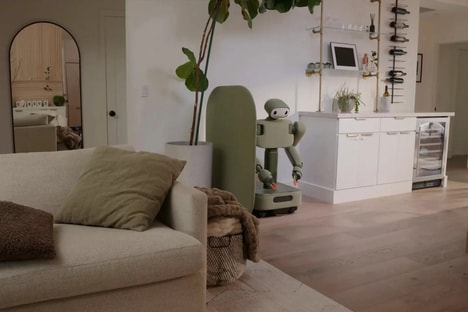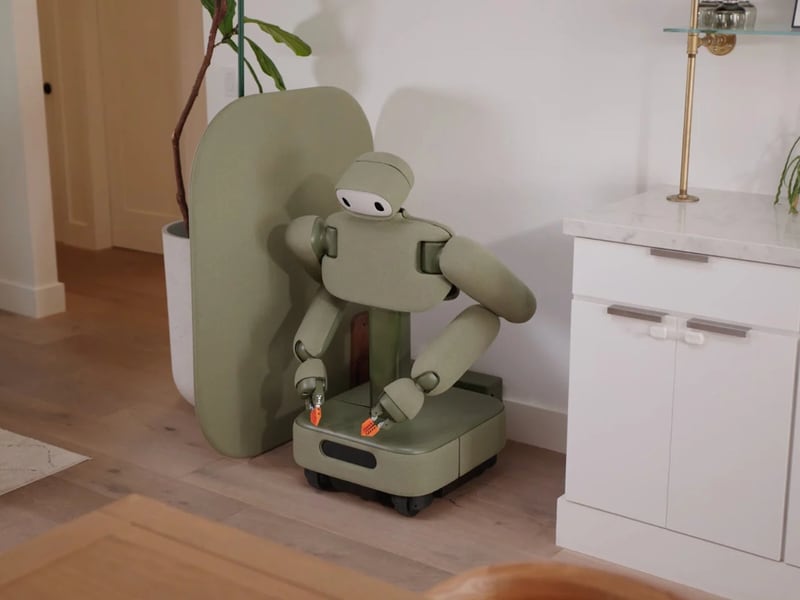
The Isaac 1 is a home robot developed by Weave Robotics that combines household automation with a soft, fabric-covered exterior designed to blend into residential interiors. Built on a wheeled base, the robot retracts to a compact height when idle and extends to reach up to 5 feet 9 inches, allowing it to perform tasks such as folding laundry, making beds, organizing clutter, and transporting household items. Swappable fabric shells in multiple colors and physical camera controls emphasize a design focused on both aesthetics and privacy.
The robot also features visual indicators that distinguish active and idle states, while a teleoperation system enables remote human assistance when autonomous operation reaches its limits. Designed for everyday domestic environments rather than industrial settings.
Image Credit: Weave Robotics
Key Themes Behind This Trend
- Soft Domestic Robotics
- Fabric-covered robot bodies signal a shift toward household automation products that feel like interior objects rather than machines.
- Privacy-centric Home Automation
- Physical camera controls and visible status cues create new space for connected devices that make sensing and autonomy more transparent in private environments.
- Teleassisted Autonomy
- Remote human support embedded into consumer robots expands the reliability of AI-driven home services when fully autonomous systems encounter complex tasks.
Where This Applies
- Consumer Robotics
- Home-focused robots with adaptive height, mobility, and task handling introduce product categories that merge appliance utility with personal assistance.
- Furniture and Home Decor
- Swappable fabric shells and furniture-inspired forms create opportunities for home furnishings brands to intersect with smart automation and robotics design.
- Smart Home Technology
- Robotic platforms that integrate visual feedback, privacy controls, and domestic task execution broaden the smart home beyond sensors and stationary devices.