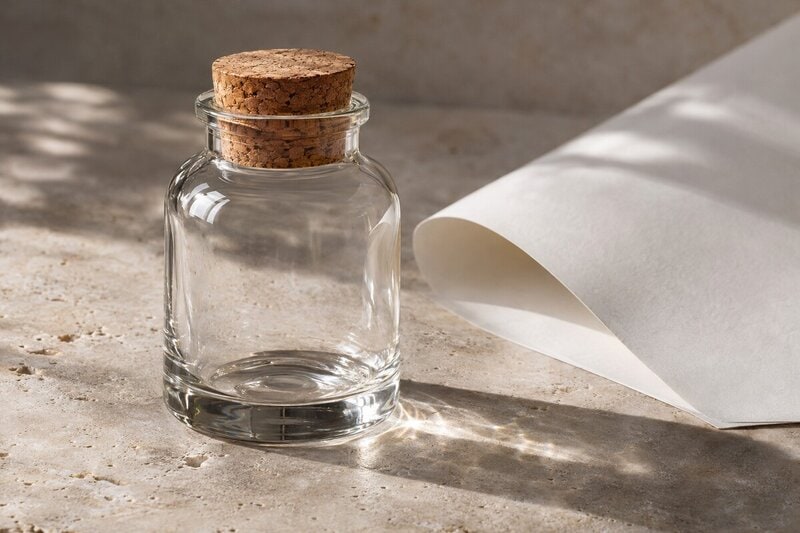
Herman Scheer shaped 'Mitzvah' artesian water into a trust-first bottled-water offer, using a nearly transparent glass bottle that keeps the liquid in view. The design arrives as Ohio State researchers report that some bottled waters held about three times the nanoplastic load of treated tap water.
Instead of heavy graphics, the bottle uses a white-on-clear treatment that leaves most of the surface open, while a cork closure carries a slim paper seal with a small M mark. The tall serif name running up the side adds a crisp, ceremonial note without obscuring the product itself.
Herman Scheer shows how a nearly transparent bottle with white type, a cork closure and a slim paper seal can make purity visible in premium bottled water packaging for Mitzvah artesian water.
Image Credit: AI-generated
Why This Trend Is Growing
- Radical Transparency
- Nearly clear packaging signals purity and product integrity, creating space for brands to differentiate through visible quality rather than graphic-heavy claims.
- Minimalist Premium Cues
- Sparse typography, restrained seals and natural closures elevate everyday goods while reducing visual clutter in crowded premium retail environments.
- Health-anxiety Packaging
- Growing concern around contaminants such as nanoplastics is reshaping packaging aesthetics toward trust, safety and material reassurance.
Industries Being Reshaped
- Bottled Water
- Premium water brands can use transparent materials and understated design systems to make purity a core part of shelf appeal.
- Packaging Design
- Agencies and manufacturers are finding new value in formats that communicate credibility through material choices, negative space and tactile closures.
- Consumer Health
- Public scrutiny of microplastics and filtration quality is expanding demand for products that visually reinforce wellness, safety and environmental awareness.
Featured Reports

The Smaller Celebration Economy
The Death of Nuance