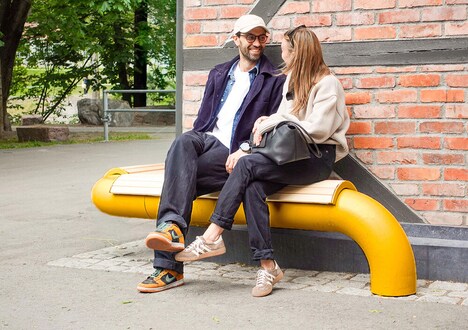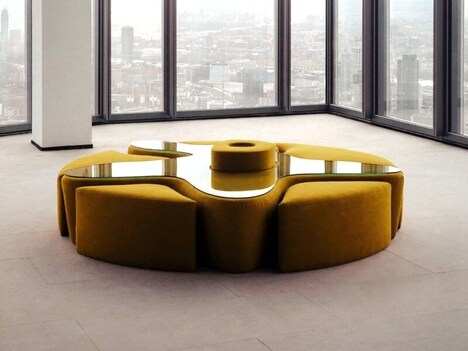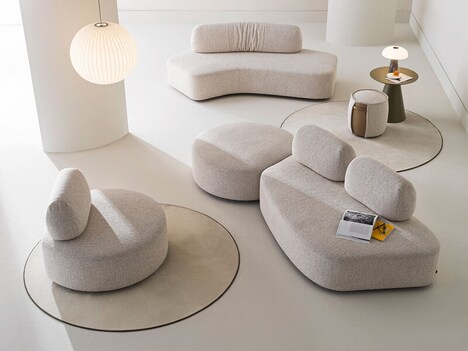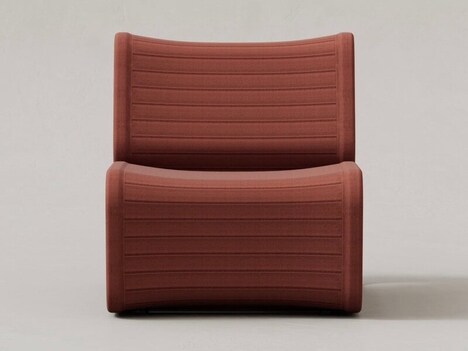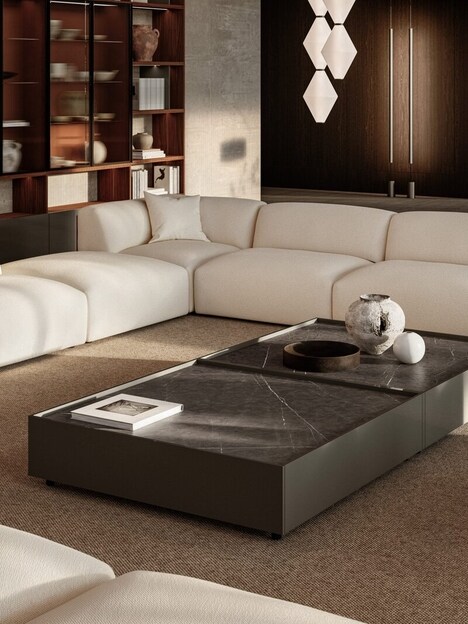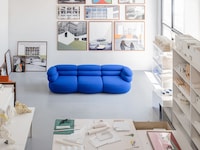
The Japanese office furniture brand NII, which was born within the 130-year-old ITOKI Corporation, presented its first exhibition outside of Japan at Salone del Mobile.Milano 2026 and the lineup featured collaborations with AMDL CIRCLE, Todd Bracher, Rodolfo Agrella, Jun Aizaki of CRÈME, and Industrial Facility.
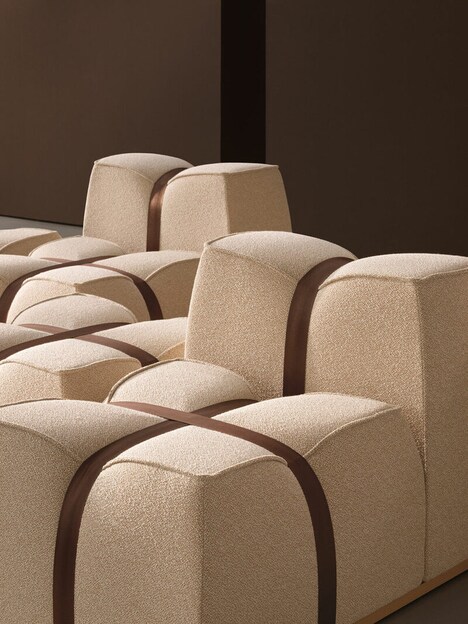
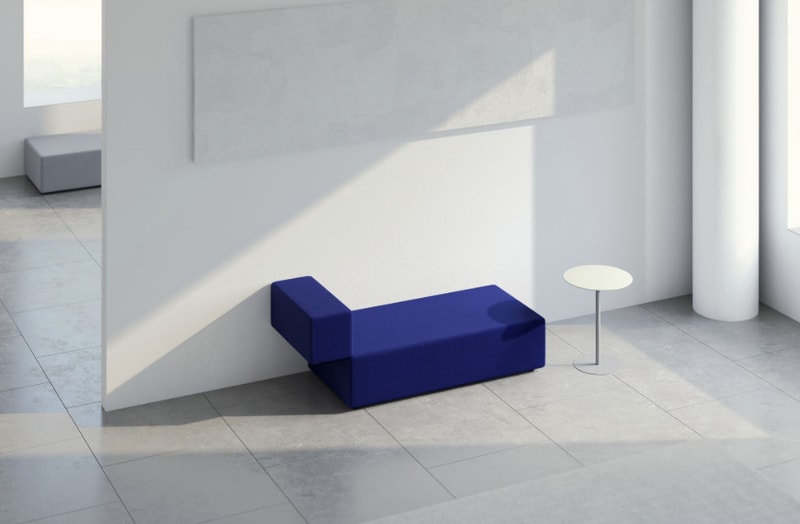
One of the key pieces on display was the BITMAP seating system designed by Todd Bracher, which consists of two rectangular volumes fused along one edge where a smaller block meets a larger main volume. This approach creates an almost suspended appearance while functioning as a side table, armrest, or additional seat accessible from all sides.
The BITMAP seating system is versatile, as it allows multiple units to combine into modular compositions that encourage communication in various configurations.
Image Credit: NII x Tod Bracher
What's Driving This Trend
- Modular Multi-functional Furniture
- A system of interchangeable seating elements that doubles as tables and partitions could redefine product lines by enabling adaptable spatial configurations without bespoke builds.
- Design-forward Minimalism
- This emphasis on sculptural simplicity paired with utility offers opportunities for premium modular pieces that blur the line between furniture and architectural object.
- Configurable Social Workspaces
- Modular units that reconfigure to support both solo and collaborative modes suggest new paradigms for furniture-as-infrastructure in evolving workplace layouts.
Who This Affects Most
- Office Furniture Manufacturing
- Manufacturers could pivot toward scalable component platforms that support mass customization and reduce SKU complexity through interoperable modules.
- Commercial Real Estate
- Flexible seating systems integrated into leased spaces point to leasing models where configurable furnishings are bundled with real estate to increase space utility and tenant appeal.
- Hospitality and Public Spaces
- Public venues adopting modular seating could enable dynamic zoning and experiential programming without costly renovations, transforming how spaces host varied events.