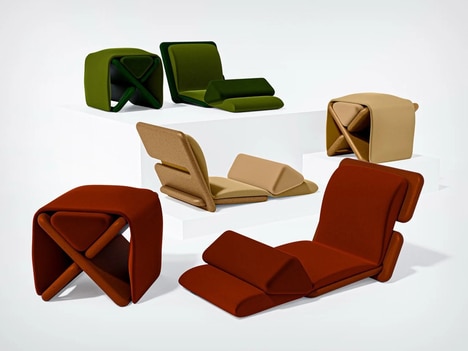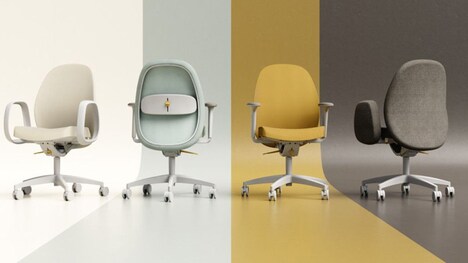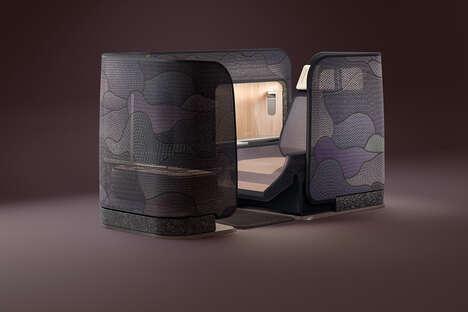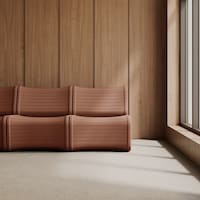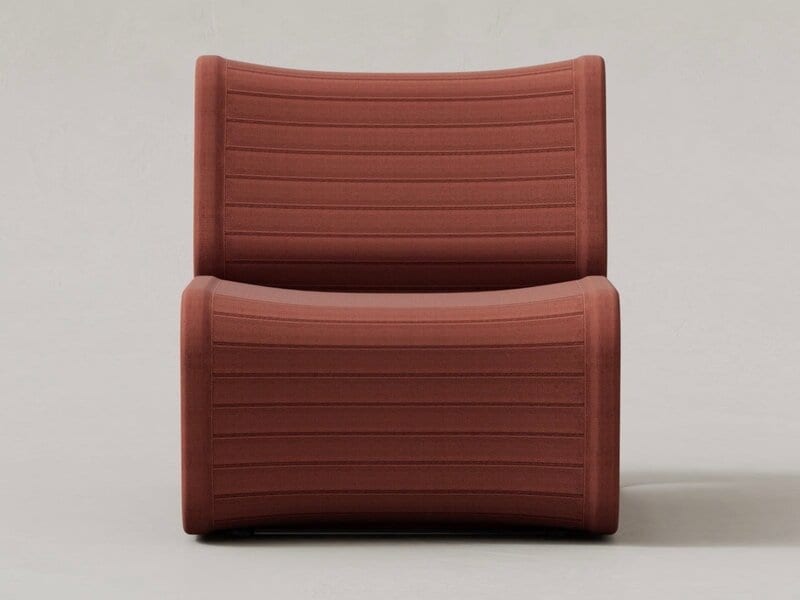
The Knit One Chair adapts modularly with a hollow knit design to offer sustainable, flexible seating. It is designed by Paul Crofts for Isomi. It replaces traditional upholstery foam with a 3D-knit textile shell that visually mimics cushioned comfort but is mostly air. Each module—lounge chair, straight ottoman, and angled segment—is reversible, allowing configurations to be flipped and combined. A bolt-on solid wood side table completes the system, maintaining clean aesthetics and utility.
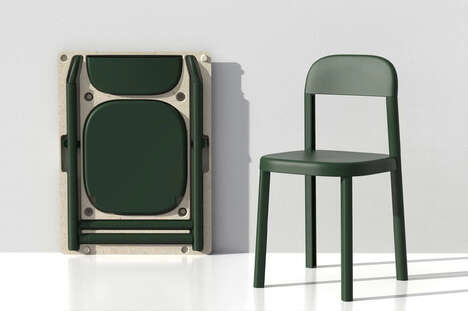
The chair sits on a lightweight metal frame designed for flat-pack shipping, reducing transport emissions and assembly complexity. By eliminating foam, cut-off waste, and non-recyclable materials, it pushes furniture sustainability further than prior eco-friendly designs. While comfort differs from traditional seating and long-term durability remains to be tested, this modular knit approach proves that environmental responsibility can coexist with elegance and adaptability in contract spaces.
Image Credit: Isomi
Why This Trend Is Growing
- Sustainable Flat-pack Furniture
- By combining flat-pack innovation with sustainability, this trend reduces transport emissions while ensuring eco-conscious consumer appeal.
- Eco-friendly Modular Seating
- This trend showcases how modular design can integrate eco-friendly materials, allowing for flexible configurations that emphasize sustainability.
- 3d-knit Textile Applications
- Applying 3D-knit textiles in furniture design eliminates traditional upholstery filling, presenting opportunities to enhance both aesthetics and environmental responsibility.
Industries Being Reshaped
- Furniture Design
- The industry is experiencing a shift towards integrating sustainable practices by utilizing innovative materials like 3D-knit textiles in place of conventional foam.
- Eco-conscious Manufacturing
- This industry is innovating beyond traditional methods to offer products that significantly lower environmental impact through smart material choices and design.
- Logistics and Supply Chain
- Incorporating flat-pack designs in furniture manufacturing presents logistics efficiencies that align with emerging sustainability standards.