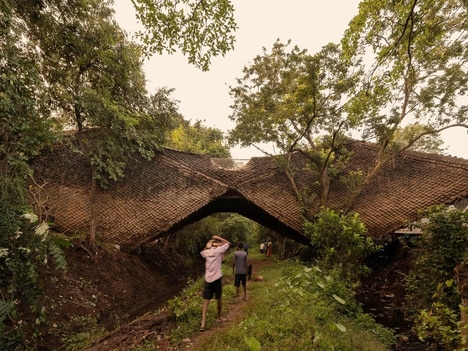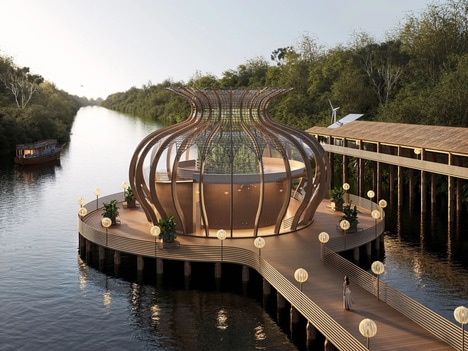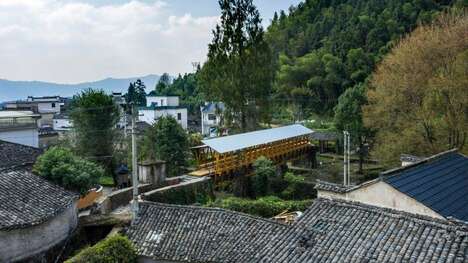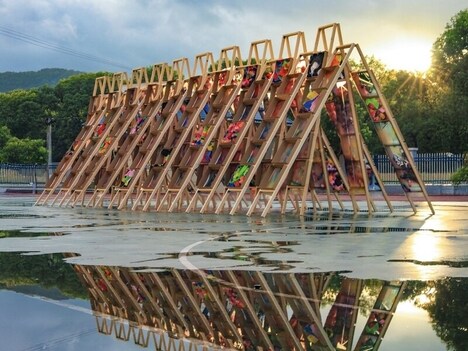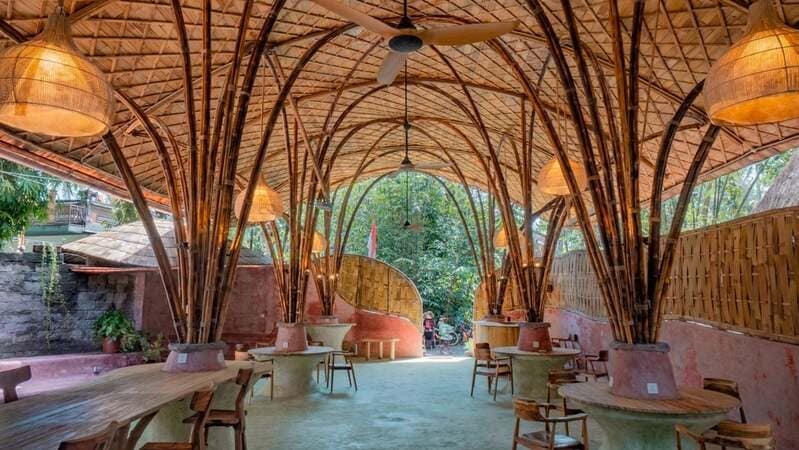
Architect Jonathan Mizzi works in collaboration with teenage students to co-design the Living Bridge. It is a bamboo learning center in Indonesia defined by arches of heat-bent bamboo. It is made to host events, talks, and other educational programs at the Green School. This is a private international school along the Ayung River in Bali.
Mizzi is the founder of Mizzi Studio and a mentor and parent at the school. He explains more on the design project, "The Living Bridge isn't just an architectural structure; it's a vessel for possibility. It proves what's possible when youth are given trust, time, and mentorship. I had the privilege of co-leading a course that empowered students to reimagine not just a space, but the future they want to live in."
Image Credit: Mizzi Studio
What's Driving This Trend
- Sustainable Architecture
- Bamboo's use as a primary construction material emphasizes sustainability and eco-friendly design in modern architecture.
- Youth-driven Co-design
- Engaging students in the architectural process highlights a shift towards collaborative design methods involving younger generations.
- Event-centric Educational Spaces
- Educational facilities are evolving into multifunctional spaces that accommodate a wide array of events beyond traditional learning environments.
Who This Affects Most
- Construction Industry
- The incorporation of materials like bamboo into mainstream building practices presents opportunities for reducing environmental impact.
- Educational Services
- Schools are increasingly serving as community hubs, integrating events and extracurricular activities into their core offerings.
- Event Management
- New architectural designs that support diverse event hosting capabilities indicate a growing demand for versatile event spaces.