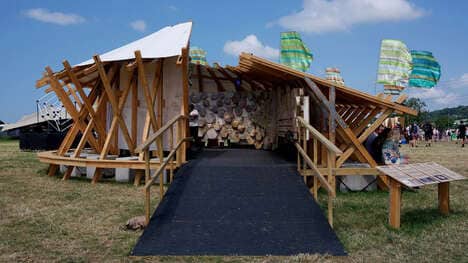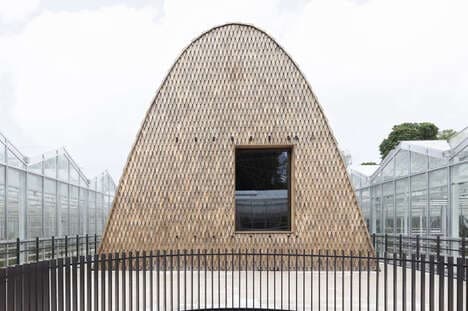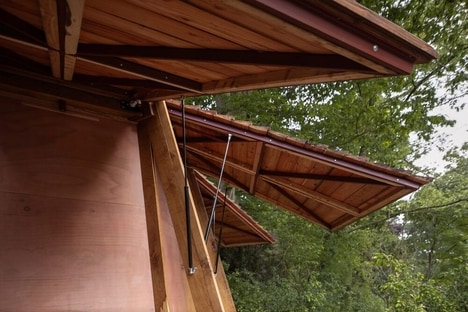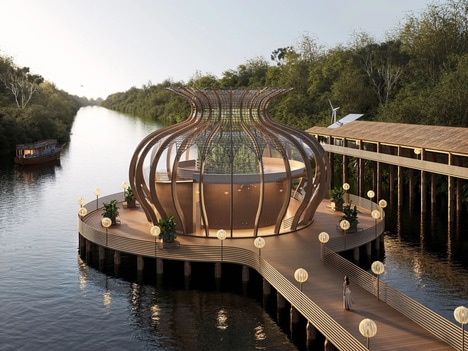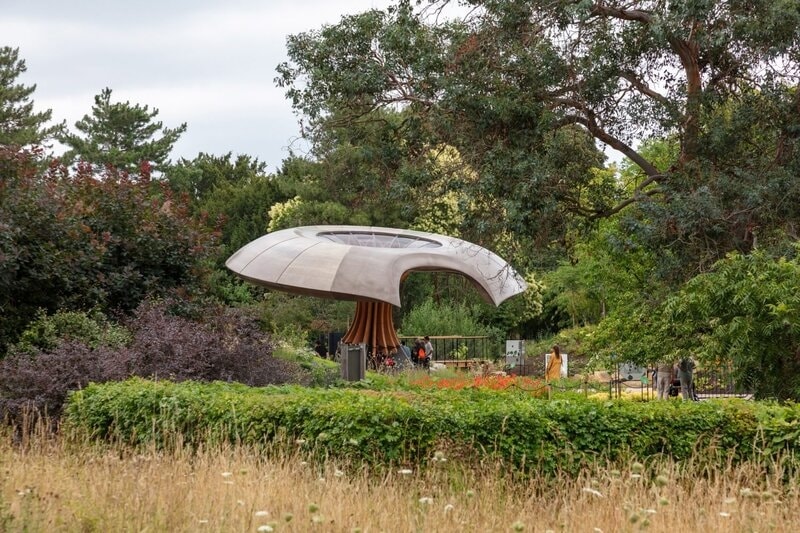
The Carbon Garden Pavilion by Mizzi Studio serves as the central sculptural element in Kew Gardens’ new Carbon Garden, opening in July 2025. Inspired by fungi and the symbiosis between plant and fungal kingdoms, the pavilion’s mushroom-like form emerges from the landscape like a symbolic fruiting body. Crafted from renewable materials—including a hardwood timber trunk, larvikite stone foundation, and a translucent flax-fiber composite canopy—the structure even collects rainwater funnelled into surrounding bioswales, reinforcing its ecological purpose.
Surrounded by themed planting zones including climate-stripe borders, drought-tolerant sections, and wildflower meadows, the garden narrates carbon’s critical role in climate resilience and biodiversity through living design. At approximately seven meters tall, the pavilion provides sheltered seating and community space woven into a didactic landscape. Together, architecture and horticulture invite visitors to reflect on sustainability and inspire ecological action through the hidden but essential interplay of plants, fungi, and design.
Image Credit: Luke Hayes
What's Driving This Trend
- Symbiotic Architecture
- Buildings designed to mimic natural symbiotic relationships create opportunities for holistic and eco-friendly urban planning.
- Biomimicry in Design
- The adoption of nature-inspired forms and functions in architecture and manufacturing represents a significant shift towards sustainable practices.
- Climate-responsive Landscaping
- The integration of adaptable, eco-conscious planting zones is gaining traction as a strategy to enhance biodiversity and mitigate climate impacts.
Who This Affects Most
- Green Architecture
- The expansion of eco-centric building designs heralds a transformative era for sustainable construction practices and materials.
- Sustainable Landscaping
- As the demand for climate-adaptive gardens grows, opportunities abound in designing spaces that prioritize resilience and ecological function.
- Renewable Materials Manufacturing
- Advancements in producing and utilizing environmentally friendly materials, such as flax-fiber composites, are reshaping conventional manufacturing processes.