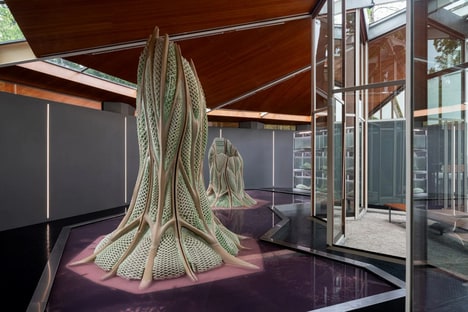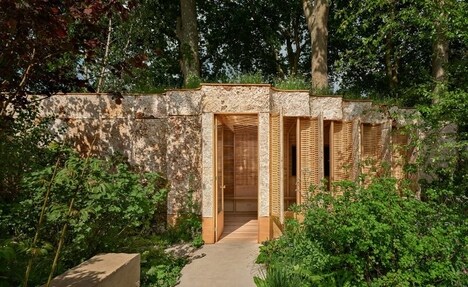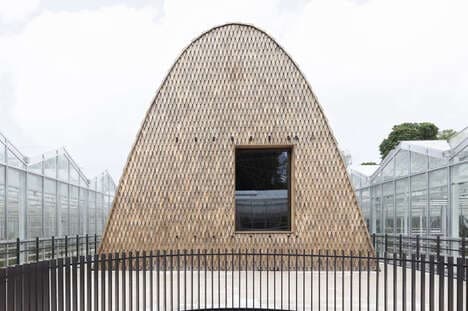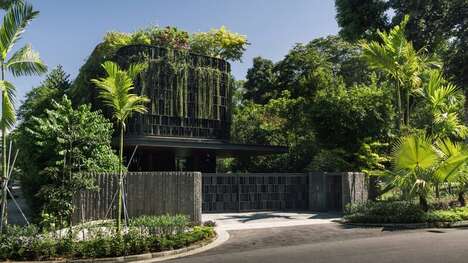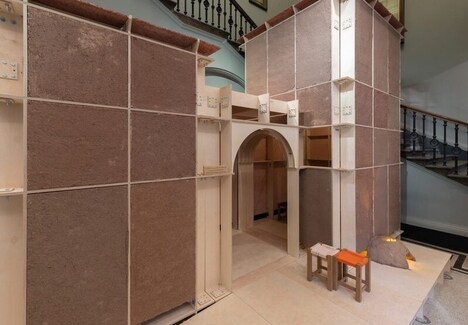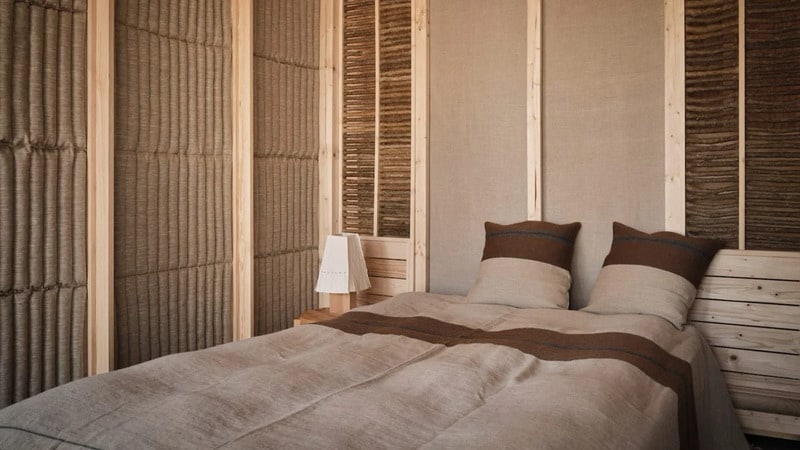
Danish designer Sara Martinsen has created the Rooted Potential pavilion using only native plants. It was first created as an exhibition at Officinet and has turned it into a guest bedroom at her summerhouse in Copenhagen. She explored the use of plants and its ability as architectural properties. It is installed in a building that she also uses as a workshop.
The 10 fibers used include: "eelgrass, flax, clematis vitalba, Japanese knotweed, cattail, lake bulrush, hemp, silver grass, pipe grass and yellow flag." She explained more on the design, "The pavilion showcases the unique character that emerges when local flora is combined with artisanal techniques. Having a cultural visual identity is essential in a world where a certain expression can be created anywhere, at any time. We humans need to put down roots and belong somewhere."
Image Credit: Kristian Holm
Why This Trend Is Growing
- Plant-based Architecture
- Exploring the fusion of native plants and design unlocks new architectural possibilities, offering sustainable and locally-sourced building solutions.
- Local Flora Integration
- Emphasizing the use of indigenous plant species in design highlights a shift towards sustainability and cultural identity in architecture.
- Artisanal Plant Fibers
- Innovations in the use of artisanal techniques with plant fibers showcase potential in creating environmentally friendly and aesthetically unique structures.
Industries Being Reshaped
- Sustainable Architecture
- The incorporation of plant-based materials in construction presents new avenues for eco-friendly building practices.
- Interior Design
- Integrating natural fibers into design elements offers diverse opportunities for creating visually impactful and sustainable interiors.
- Material Innovation
- Advancements in plant-based materials provide the textile industry with eco-conscious alternatives for various applications.