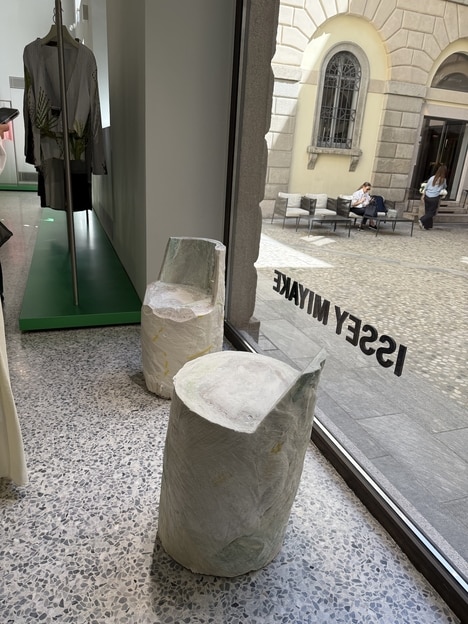
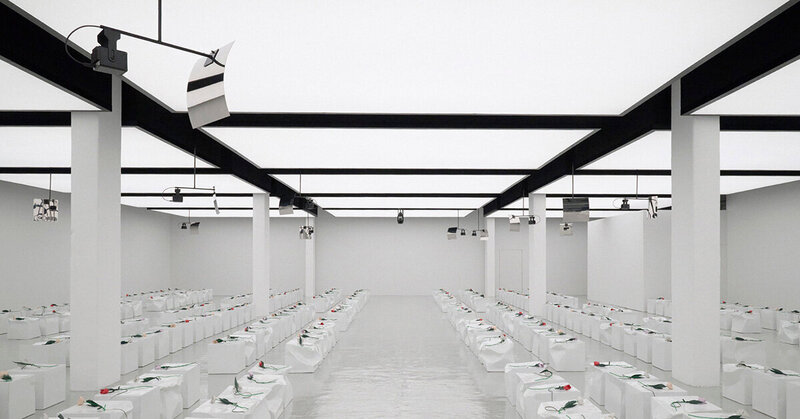
Bottega Veneta is turning cardboard boxes into stools for its Summer 2027 show, with Illya Goldman Gubin shaping each piece by hand before hardening it into furniture. The result is a seat that keeps the box's folds and uneven edges visible rather than hiding them.
Each stool begins as a single box, then is crumpled, pressed, and reinforced with resin and fiberglass. That process preserves the cardboard's creases, dents, and interlocking flaps in the finished form, giving each seat a slightly different profile. The shape also echoes the brand's Intreccio leather weave without losing the raw box structure.
Within this category, this pushes cardboard beyond disposable packaging and into collectible seating. It also gives fashion-show furniture a more tactile, process-led look, keeping the making visible in the object itself. Buyers seeking statement pieces now have another example of how an ordinary material can carry more than one identity.
Image Credit: designboom | architecture & design magazine, designboom, designboom
Why This Trend Is Growing
- Elevated Cardboard Furniture
- Discarded packaging gains collectible status when resin, fiberglass, and hand-finishing transform fragile boxes into durable design objects.
- Visible-making Aesthetics
- Products that preserve folds, dents, seams, and construction traces create value through tactile evidence of process rather than polished uniformity.
- Runway Object Design
- Fashion presentations are expanding into limited-edition furniture moments where seating, staging, and brand codes become covetable physical artifacts.
Industries Being Reshaped
- Luxury Fashion
- Heritage brands can extend visual signatures into unexpected materials, turning runway environments into experimental platforms for collectible design.
- Furniture Design
- Material reinvention is reshaping seating categories as humble substrates are engineered into premium, one-of-one functional pieces.
- Sustainable Packaging
- Packaging materials are finding higher-value afterlives in interiors, suggesting new intersections between circular design, craftsmanship, and luxury positioning.