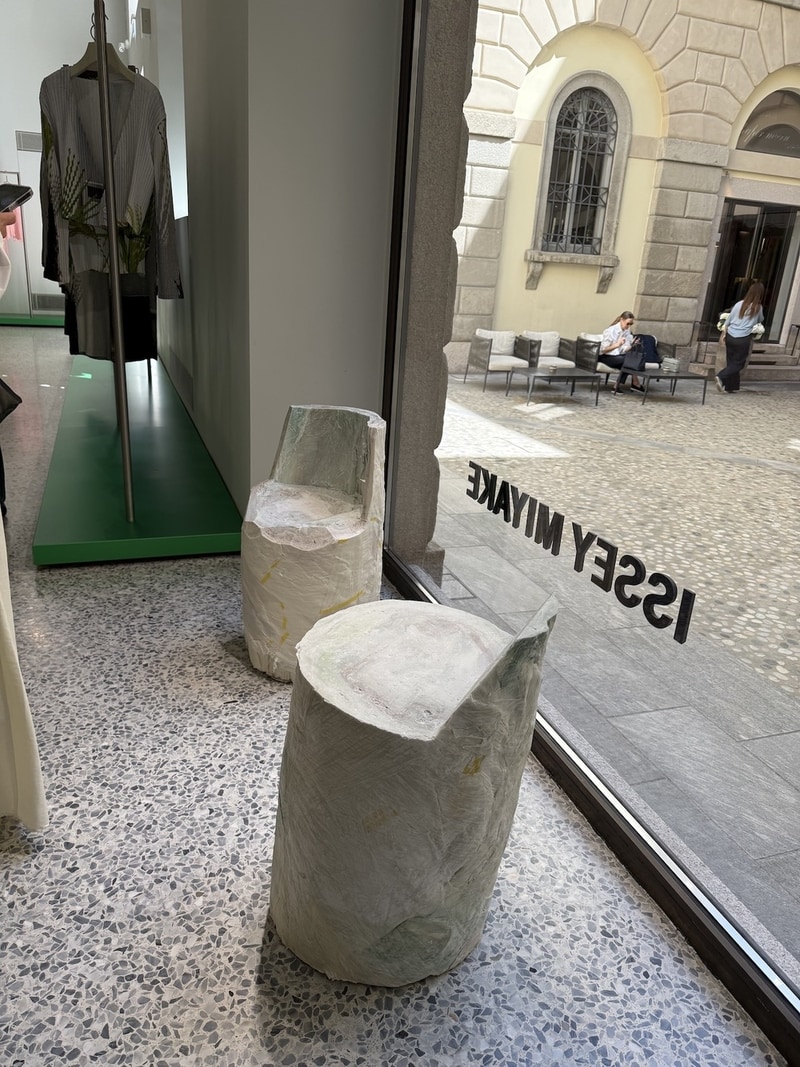
Issey Miyake's The Paper Log: Shell and Core installation transformed the brand’s Milan flagship into an experimental furniture environment during Milan Design Week. Developed in collaboration with Spanish architecture studio Ensamble Studio, the project repurposed compressed paper rolls generated through Issey Miyake’s pleating process. The dense cylindrical forms, originally used to protect garments during heat pleating, were reworked into sculptural chairs, benches, tables, and lighting pieces. Their layered cross-sections produced marble-like patterns and geological textures formed naturally through colour transfer from the garments.
The installation was led by Miyake Design Studio director Satoshi Kondo, who explored methods including wax hardening, carving, slicing, and bundling to alter the material’s structure. Some pieces retained rough exposed edges, while others resembled polished stone or wood surfaces despite being entirely paper-based. Ensamble Studio approached the material differently by peeling apart the compressed rolls into thin sheets, then molding and hardening them into lighter sculptural forms.
Image Credit: Issey Miyake
Key Themes Behind This Trend
- Upcycled Material Architecture
- A shift toward repurposing production byproducts into load-bearing and aesthetic elements suggests new forms of sustainable built environments that blur waste and raw material boundaries.
- Paper-based Structural Design
- The demonstration of hardened and carved paper as durable, stone-like furniture indicates potential for lightweight, low-carbon structural components in interior and small-scale construction.
- Hybrid Craft-industrial Processes
- Combining hands-on techniques like carving and peeling with studio-scale molding points to novel production workflows that merge artisanal finish with repeatable manufacturing.
Where This Applies
- Furniture and Interior Design
- Design firms and retailers could leverage sculptural, paper-derived pieces to offer premium, sustainable collections with reduced reliance on traditional hardwoods and minerals.
- Textile and Apparel Manufacturing
- Garment producers that generate compressible byproducts present opportunities for circular value chains in which protective or residual materials are upcycled into secondary design products.
- Advanced Materials and Composites
- Material science companies might explore binding, hardening, and surface treatments for cellulose-based composites to create engineered alternatives to stone, wood, and plastics.