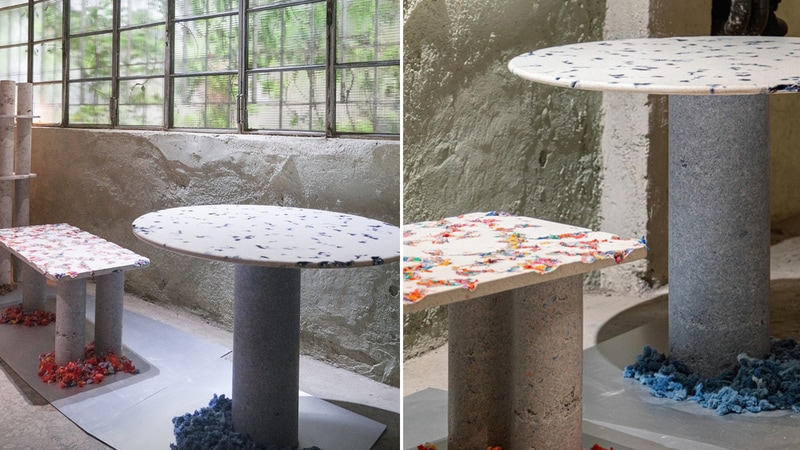
The Archeomaterico Chromaterico Textile Objects collection has been created through a collaboration with Chroma Composites as a series of furniture designs that take an eco-influenced, upcycled approach to decor.
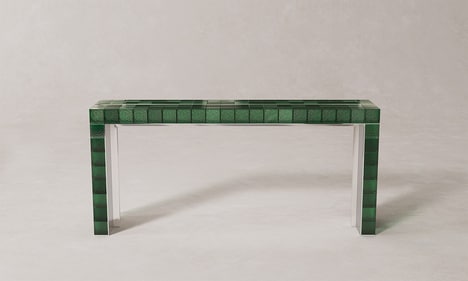
The range is achieved through the use of directive, discarded and unsold garments that have been processed into a raw material that's suited for furniture construction use. The material, entitled Textilite, maintains a stone-like composite that makes up the Stride bench, Cencio shelving system and the Brandello table, which are each inherently different thanks to the recycled manufacturing process.
The Archeomaterico Chromaterico Textile Objects collection identifies one of a growing number of solutions being developed to help transform waste products into something new. This process comes as a double-duty by utilizing waste materials, but also being more desirable because of its recycled nature and one-of-a-kind design.
Image Credit: FG&CO Studio
What's Driving This Trend
- Upcycled Textile Composites
- Discarded garments are gaining value as durable composite materials, creating room for premium products that merge sustainability with distinctive surface aesthetics.
- One-of-a-kind Furniture
- Variability from recycled inputs is becoming a desirable design feature, allowing mass-produced categories to adopt the appeal of limited-edition craftsmanship.
- Circular Decor Materials
- Waste-to-product material systems are reshaping interiors by turning disposal challenges into high-end decor components with lower environmental impact.
Who This Affects Most
- Furniture Design
- Sustainable composites made from fashion waste are expanding the material palette for benches, tables and shelving with differentiated eco-luxury positioning.
- Fashion Recycling
- Unsold and discarded apparel streams can be reimagined as inputs for non-fashion categories, connecting textile recovery with higher-margin design markets.
- Interior Materials
- Stone-like recycled textile surfaces introduce new possibilities for architects and designers seeking sustainable alternatives to conventional construction finishes.