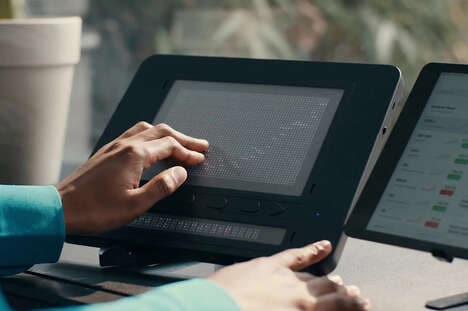
Tanvas touchscreens are an inventive new haptic touchscreen technology that touches back.
Imagine driving in a car with all its controls on a touch screen. Instead of turning a volume knob on touch alone like you would in an older car, you have to physically look at the screen to see where it is located and the degree to which you have adjusted the control. With Tanvas touchscreens, the screen touches back. When you touch the screen it provides a physical response, meaning that the touchscreen can convey messages to your brain with the sense of touch.
Tanvas was able to easily adapt this technology to a Nexus 9 tablet by placing their glass and a circuit board over the display. While the initial expense of the glass is higher than touch-glass used today, by replacing the need for haptic controls with a Tanvas touchscreen, the cost remains close to the same as using a traditional touchscreen.
What's Driving This Trend
- Haptic Touchscreens
- Disruptive innovation opportunity: Creating immersive and interactive user experiences through touch feedback on touchscreens.
- Innovative User Interfaces
- Disruptive innovation opportunity: Redesigning user interfaces to incorporate haptic technology for enhanced functionality and user engagement.
- Tangible Digital Interactions
- Disruptive innovation opportunity: Bridging the physical and digital worlds by enabling touchscreens to convey tactile sensations and enhance communication.
Who This Affects Most
- Automotive
- Disruptive innovation opportunity: Integrating haptic touchscreens in car interiors to improve user interface design and create more intuitive vehicle controls.
- Consumer Electronics
- Disruptive innovation opportunity: Incorporating haptic touchscreens in electronic devices such as tablets and smartphones to revolutionize the way users interact with digital content.
- Medical and Healthcare
- Disruptive innovation opportunity: Applying haptic touchscreens in medical devices and healthcare systems to enhance user feedback, improve precision, and facilitate remote diagnostics.