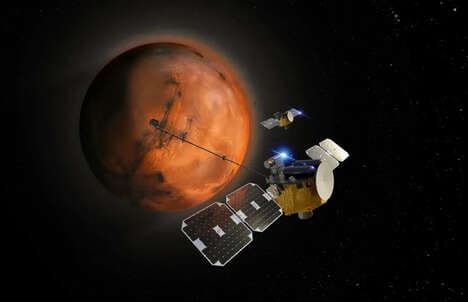
NASA indicated that it will be testing a new Solar Sail system in order to assess its efficacy versus more conventional propellant thrusters, in moving smaller satellites. The solar sail design has a chance to act as a way to move space crafts in a more cost-effective way, especially for missions being conducted in deep space. This is because sail designs do not require any fuel, which can significantly increase the costs associated with a mission.
NASA’s mission is titled Advanced Composite Solar Sail System or ACS3, and the space agency will rely on NanoAvionics, a company from Illinois, to provide the spacecraft. The mission states that a small satellite will be taken into orbit with a solar sail, which measures in at 800 square feet.
Image Credit: NASA
Why This Trend Is Growing
- Solar Sail Propulsion
- Solar sail designs can provide a more cost-effective way to move satellites in deep space, eliminating the need for traditional propellant thrusters.
- Fuel-free Missions
- By utilizing solar sails, space missions can eliminate the need for fuel, reducing costs associated with a mission.
- Advanced Composite Solar Sail System (ACS3)
- NASA's ACS3 mission aims to test the efficacy of solar sails in moving smaller satellites, potentially revolutionizing space propulsion technology.
Industries Being Reshaped
- Space Exploration
- Solar sail propulsion technology presents opportunities for more cost-effective and efficient space exploration.
- Satellite Manufacturing
- The development and implementation of solar sail systems for satellites could disrupt the satellite manufacturing industry, offering a more sustainable and affordable propulsion method.
- Renewable Energy
- Solar sail technology showcases the potential of renewable energy sources in various applications, including space propulsion systems.