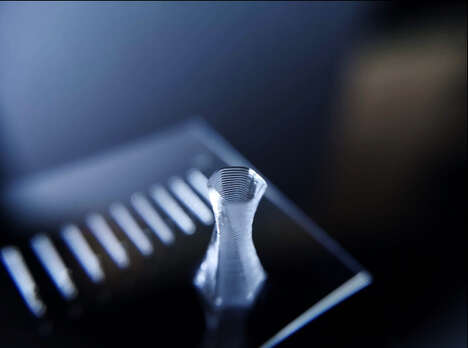
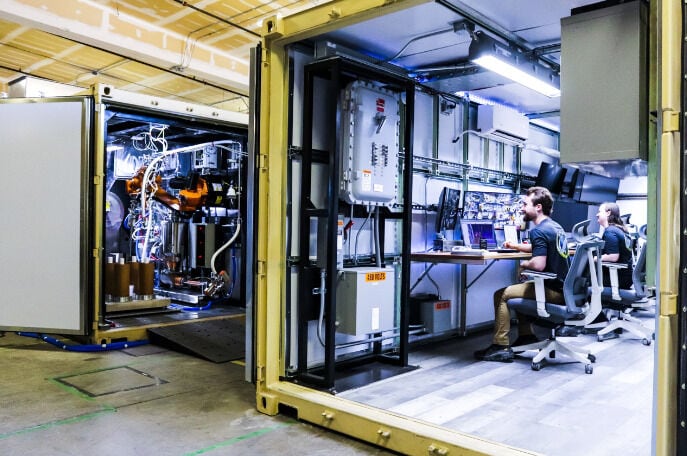
'X-Bow Launch Systems' is a new player in the space travel and space exploration industries that recently emerged from being a stealth company. Since emerging from stealth, X-Bow has successfully completed its first orbital test flight of its 'Bolt' rocket. The Bolt is a modular boost rocket largely comprised of 3D-printed materials.
X-Bow sought not only to enter the space travel market, but to wholly disrupt the industry. As such, the company's Bolt rocket was manufactured in a far more cost-effective, energy-efficient process that leverages spacecraft-grade 3D-printing. According to X-Bow, the additive manufacturing process is "considerably more cost-effective" than large competitors' methods.
The orbital test flight was achieved via a partnership between X-Bow Launch Systems and the 'Los Alamos National Laboratory.' Both companies expressed their positive thoughts on the partnership and what the success means going forward.
Image Credit: X-Bow Launch Systems
Why This Trend Is Growing
- Space-exploration 3D Printing
- The use of 3D printing in space-exploration can greatly reduce costs and increase efficiency.
- Modular Rocket Systems
- Modular rocket systems can allow for greater flexibility and customization in space exploration missions.
- Additive Manufacturing in Aerospace
- The aerospace industry can greatly benefit from the use of additive manufacturing in the production of spacecraft and rockets.
Industries Being Reshaped
- Space Travel
- Cost-effective and energy-efficient rocket manufacturing can greatly disrupt the space travel industry.
- Aerospace Engineering
- The use of 3D printing and modular rocket systems can disrupt aerospace engineering by providing new design and manufacturing opportunities.
- Defense Technology
- The success of X-Bow Launch Systems and its partnership with the Los Alamos National Laboratory demonstrates the potential for additive manufacturing and modular rocket systems in the defense industry.