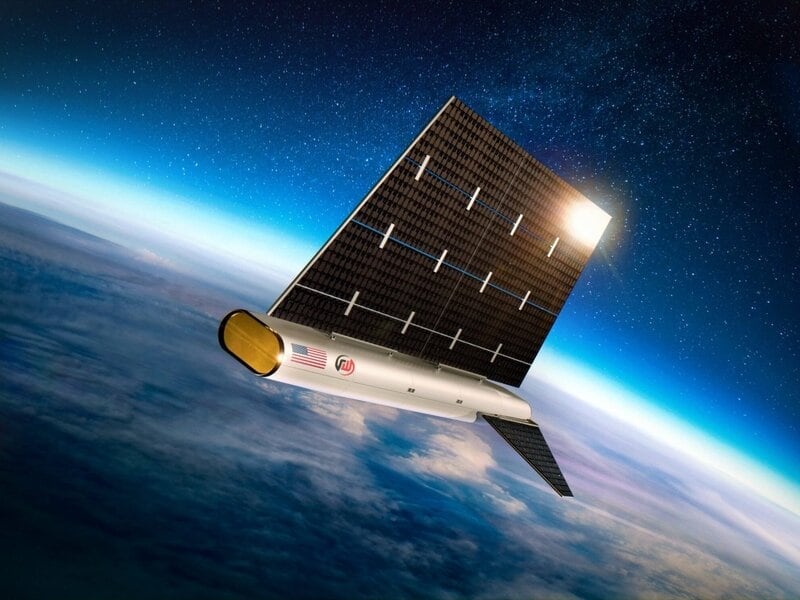
The SabreSat introduces an air-breathing propulsion approach designed to keep satellites operating in very low Earth orbit by turning the thin upper atmosphere into usable propellant. The system captures residual air molecules and feeds them into an electric thruster, allowing the satellite to counteract drag without relying solely on stored fuel.
The glider-shaped body works with its tall solar sail structure to generate power while also helping stabilize flight at low altitudes. The design supports longer missions in regions previously avoided due to rapid decay, opening possibilities for clearer imaging and lower latency communication systems.
The satellite can switch between conventional propellant and the air-breathing mode depending on mission needs. The flexible operation helps extend lifespan and improve maneuverability in dense orbital layers. The lower altitude also increases observation precision, making the concept valuable for Earth-focused missions that depend on sharp data. The system highlights how a hybrid propulsion strategy can unlock more efficient use of orbital space that has historically been difficult to occupy.
Image Credit: Redwire
What's Driving This Trend
- Air-breathing Propulsion
- Utilizing atmospheric molecules as propellant represents a new wave of satellite technology, broadening operational scope by reducing dependence on stored fuels.
- Hybrid Propulsion Systems
- Combining conventional and innovative air-breathing propulsion offers increased satellite flexibility, allowing for extended missions and improved maneuverability.
- Low-earth Orbit Optimization
- By enabling sustained operations at lower altitudes, satellites can achieve higher observation precision, paving the way for enhanced imaging and communication capabilities.
Who This Affects Most
- Satellite Manufacturing
- The integration of air-breathing propulsion in satellite designs presents new opportunities for manufacturers to create more efficient and versatile spacecraft.
- Space Communications
- Lower latency communication systems become increasingly viable with satellites capable of operating efficiently at lower altitudes.
- Earth Observation
- Satellites with improved maneuverability and longer operational lifespans enhance the potential for sharper, high-resolution imaging and data collection.